Self-Regulation Activities for Kids: 35 OT Ideas to Calm, Focus and Cope
What self-regulation is, how it develops, co-regulation, the Zones of Regulation and Alert Program, and 35 OT self-regulation activities for toddlers to teens.


Every child has moments of being “too wound up” or “too flat” to learn, play or get along. Self-regulation is the ability to notice these states and do something to get back to “just right”. It’s a skill, and like any skill it can be taught and practised.
What is self-regulation?
Self-regulation is the ability to manage energy, emotions, attention and behaviour to fit the situation. It includes:
- calming down after being upset or excited
- getting going when tired or sluggish
- waiting, taking turns and stopping an impulse
- focusing on a task and shifting to the next one
How self-regulation develops
Older children and teens ↑
-
Self-regulation
Notices own state and chooses a strategy independently.
-
Guided self-regulation
Uses strategies with reminders and visual supports.
-
Shared regulation
Adult and child do strategies together.
-
Co-regulation
A calm adult soothes and organises the child.
Babies and toddlers
Young children learn to regulate by being regulated, again and again, by calm adults.
Two OT frameworks
| Zones of Regulation | Alert Program | |
|---|---|---|
| Created by | Occupational therapist Leah Kuypers | Occupational therapists Mary Sue Williams and Sherry Shellenberger |
| Core idea | Four colour zones of feelings and energy | An engine that runs high, low or just right |
| States | Blue (slow, tired, sad), Green (calm, focused), Yellow (wiggly, worried, frustrated), Red (out of control) | High, low, just right |
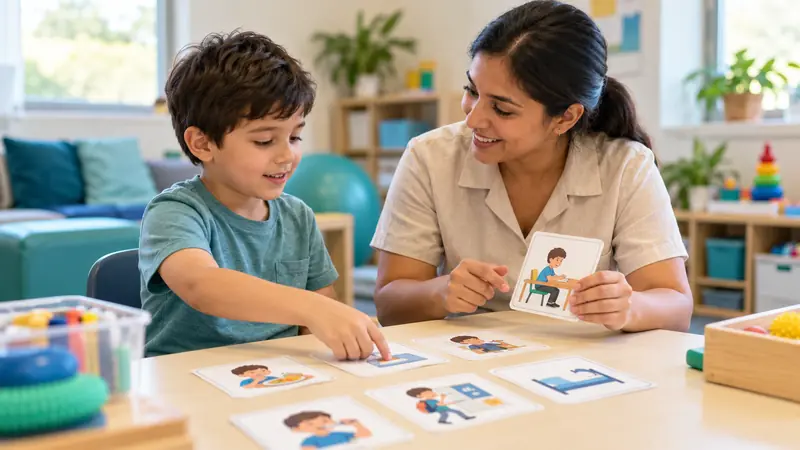
| How it helps | Name the zone, then choose a tool to move zones | Notice the engine, then use sensory strategies to change speed |
How to teach a strategy
-
Practise when calm
Teach and rehearse strategies in a good moment.
-
Model it
"I'm frustrated. I'll take three slow breaths."
-
Notice together
"Your body looks wiggly. What zone are you in?"
-
Offer a choice
Show 2–3 tools on a visual menu.
-
Reflect afterwards
"That helped you calm down. Nice choice."
35 self-regulation activities
| Activity | Good for |
|---|---|
| 1. Wall push-ups | Calming, focusing |
| 2. Carrying heavy items | Calming. See heavy work |
| 3. Animal walks | Alerting and organising |
| 4. Star jumps | Waking up a sluggish body |
| 5. Bear hugs or self-hugs | Calming |
| 6. Squeeze a stress ball or putty | Calming hands |
| 7. Slow rocking or swinging | Calming |
| 8. Yoga poses (tree, mountain, child's pose) | Calming and body awareness |
| 9. Shake it out | Releasing tension |
| 10. Push palms together hard for 10 seconds | Quick, quiet calming |
| 11. Drink cold water through a straw | Alerting and organising |
| 12. Crunchy snack | Alerting |
| Activity | How |
|---|---|
| 13. Smell the flower, blow the candle | Slow in through the nose, long out through the mouth |
| 14. Balloon breathing | Hands on tummy; fill like a balloon, let it out slowly |
| 15. Starfish breathing | Trace around the fingers: breathe in going up, out going down |
| 16. Square breathing | In 4, hold 4, out 4, hold 4 (older children) |
| 17. Bubble blowing | Slow, long breaths make big bubbles |
| 18. 5-4-3-2-1 grounding | 5 things you see, 4 hear, 3 feel, 2 smell, 1 taste |
| 19. Body scan | Notice each body part from toes to head |
| 20. Glitter jar | Shake, then watch it settle |
| Game | Skill |
|---|---|
| 21. Simon Says | Listening and stopping |
| 22. Freeze dance | Stopping on cue |
| 23. Red light, green light | Start and stop control |
| 24. Musical statues | Holding still |
| 25. Slow-motion races | Controlling speed |
| 26. Jenga | Careful, controlled movement |
| 27. Turn-taking board games | Waiting and coping with losing |
| 28. 'Opposite' game | Thinking before acting |
| Tool | How |
|---|---|
| 29. Feelings check-in chart | Point to the face or colour that matches |
| 30. Zones or engine check | "What zone/engine speed am I in?" |
| 31. Visual calm-down menu | Pictures of 4–6 strategies to choose from |
| 32. Calm corner | Cushions, soft light, sensory tools |
| 33. Body clues detective | Where do I feel this feeling? See interoception |
| 34. Size of the problem | Is it a small, medium or big problem? |
| 35. Drawing or journaling | Express the feeling, then problem-solve |
Tips by age
- Toddlers: rely on co-regulation: calm voice, cuddles, rocking, simple words for feelings.
- Preschoolers: feelings faces, breathing games, a calm corner, simple choices.
- School age: Zones or engine language, visual menus, movement breaks, self-check-ins.
- Teens: self-monitoring, exercise, music, mindfulness apps, talking it through.
How occupational therapy helps
An occupational therapist looks at what affects a child’s regulation (sensory processing, sleep, routines, environment and skills), then teaches strategies, builds a sensory diet, and coaches parents and teachers in co-regulation. Read more about sensory overload, sensory diet for ADHD and OT goals for autism.
Summary
Self-regulation is learned through co-regulation and practice. OT frameworks like the Zones of Regulation and the Alert Program help children notice their state and choose a strategy. Mix body, breathing, game and feelings tools, practise them when calm, and build them into daily routines.
References
- Kuypers LM. The Zones of Regulation. Think Social Publishing; 2011.
- Williams MS, Shellenberger S. How Does Your Engine Run? A Leader’s Guide to the Alert Program for Self-Regulation. TherapyWorks; 1996.
- Center on the Developing Child at Harvard University. Executive function & self-regulation.
- Shanker S. Self-Reg: How to Help Your Child (and You) Break the Stress Cycle. Penguin.
Frequently asked questions
What is self-regulation in children?
What are self-regulation activities for kids?
What is co-regulation?
What are the Zones of Regulation?
What is the Alert Program?
Written by
Deepam Pawar, OT
Deepam Pawar is an occupational therapist and co-founder of Occupational Therapy OT. He focuses on clinical frameworks, assessment, and evidence-based practice.
All articles by Deepam →This article is for general education and is not a substitute for individualized assessment or treatment by a licensed occupational therapist. Always seek the guidance of a qualified professional for specific concerns.