Frames of Reference
Acquisitional Frame of Reference in OT: Skill and Role Acquisition with Examples
The acquisitional frame of reference: learning theory, task analysis, chaining, grading, Mosey's role acquisition, worked examples and a quiz.

Author
Occupational Therapist · Co-founder, Occupational Therapy OT
Deepam Pawar is an occupational therapist and co-founder of Occupational Therapy OT. He focuses on clinical frameworks, assessment, and evidence-based practice.
The acquisitional frame of reference: learning theory, task analysis, chaining, grading, Mosey's role acquisition, worked examples and a quiz.
What activities of daily living are, basic ADLs vs instrumental ADLs with examples, how OTs assess them (Katz, Lawton, FIM), and a free printable ADL checklist.
Adaptive eating equipment explained by an OT: built-up and weighted utensils, rocker knives, plate guards, scoop dishes and adapted cups.
The behavioral and cognitive-behavioral frames of reference in OT: ABC analysis, reinforcement, shaping, chaining, CBT techniques, examples and a quiz.
The biomechanical frame of reference: principles, assessments, grading, pediatric positioning, worked cases, biomechanical vs NDT and rehab, and a quiz.
Allen's cognitive disability frame of reference: the 6 cognitive levels, ACLS and RTI assessments, how to adapt tasks at each level, a case and a quiz.
The developmental frame of reference: Llorens' premises, Mosey's adaptive skills, interventions, worked cases, comparisons with other frames, and a quiz.
Practical executive function activities and strategies for teenagers: planning, time management, organisation, starting tasks, studying and emotional control.
What heavy work is, why it calms and focuses kids, and 50 OT heavy work activities for home, classroom, outdoors, toddlers and bedtime, with a free printable.
The motor learning frame of reference: Fitts and Posner's stages, practice schedules, KR vs KP feedback, task-oriented training, CO-OP and evidence.
The NDT (Bobath) frame of reference explained, with Rood, Brunnstrom and PNF sensorimotor approaches, key principles, examples and what the evidence says today.
The Occupational Adaptation model: occupational challenge, press for mastery, adaptive response, relative mastery, assessment, a case example and a quiz.
OT activities for stroke recovery: daily living practice, arm and hand activities, thinking and vision tasks, home ideas and what the evidence says.
How occupational therapy helps adults with ADHD: routines, time management, organisation, sensory needs, work and study strategies, and when to seek support.
Every OT frame of reference and model compared: 15 frames, 6 models, Mosey's 5 parts, which frame for which setting, a worked case, quiz and free PDF.
Occupational therapy models of practice compared: PEO, CMOP-E, PEOP, EHP, MOHO and Kawa, how models differ from frames of reference, with diagrams and examples.
How OT helps people with Parkinson's: cueing, daily living strategies, handwriting, home safety, fatigue and evidence from a Lancet Neurology trial.
Calming proprioceptive and heavy work activities to help kids wind down before bed, a sample bedtime routine and weighted blanket safety.
What self-regulation is, how it develops, co-regulation, the Zones of Regulation and Alert Program, and 35 OT self-regulation activities for toddlers to teens.
How a sensory diet can help kids with ADHD stay calm and focused: a sample school-day schedule, alerting and calming activities and a printable.
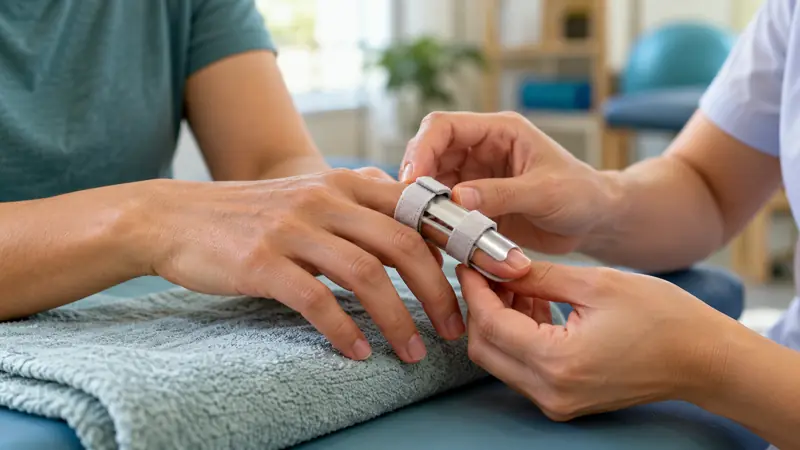
How OT and hand therapy treat trigger finger: splinting, tendon gliding exercises, activity changes, the evidence, and when injection or surgery helps.
Executive function explained: working memory, flexible thinking and self-control, signs of executive dysfunction, ADHD links and OT strategies by age.
Interoception is how we feel hunger, thirst, toilet needs and emotions inside the body. Signs of interoception difficulties and OT activities that help.
How occupational therapy helps children with ADHD: assessment, sensory and organisation strategies, behaviour modification, classroom changes and parent tips.
What a sensory diet is, how occupational therapists build one, calming and alerting activities, a sample day for school-age children, and tips that work.
An occupational therapist explains proprioception, signs a child is seeking it, and 50+ heavy work activities for babies, toddlers, school, home and adults.
An occupational therapist explains the vestibular system, gravitational insecurity and movement seeking, safety rules, and 30+ calming and alerting activities.
An occupational therapist explains sensory integration: Ayres' theory, the 8 senses, how SI therapy works, what a session looks like and what research shows.
What sensory overload is, common signs and triggers, why it happens in autism, ADHD, anxiety and PTSD, and practical OT strategies to calm it and prevent it.
Sensory processing disorder explained by an occupational therapist: the signs by age, the main types, SPD vs autism and ADHD, assessment and treatment.
Why some children crash, spin, chew and touch everything: signs of sensory seeking, how it differs from ADHD, and 25 OT activities to meet the need safely.
An occupational therapist explains the tactile system, signs of touch sensitivity or seeking, and 30+ tactile activities for home, school and therapy.
How to choose sensory toys by need: calming, alerting, touch, movement, oral and visual. OT-recommended ideas by age, plus key safety tips.
What occupational therapists do: daily duties, work in hospitals, schools, mental health and home care, a day in the life, roles and how to become one.
What occupational therapy is in plain words: definitions, what 'occupation' means, who OT helps, its history, practice areas and how OT works.