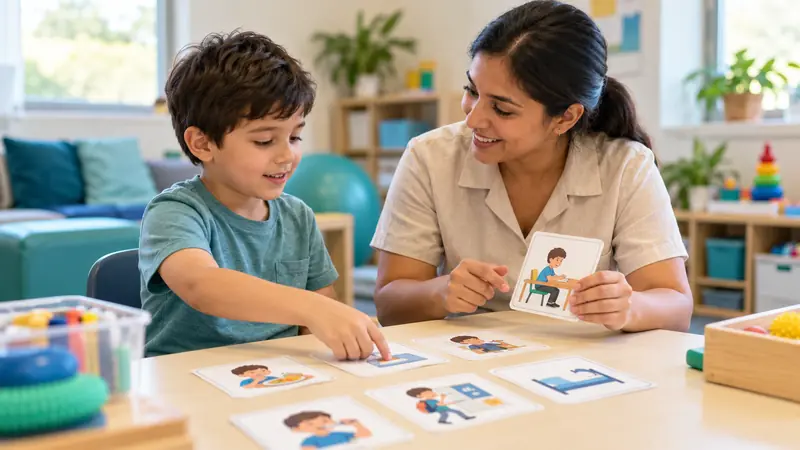
Occupational Therapy for ADHD: Assessment, Strategies and Tips
How occupational therapy helps children with ADHD: assessment, sensory and organisation strategies, behaviour modification, classroom changes and parent tips.

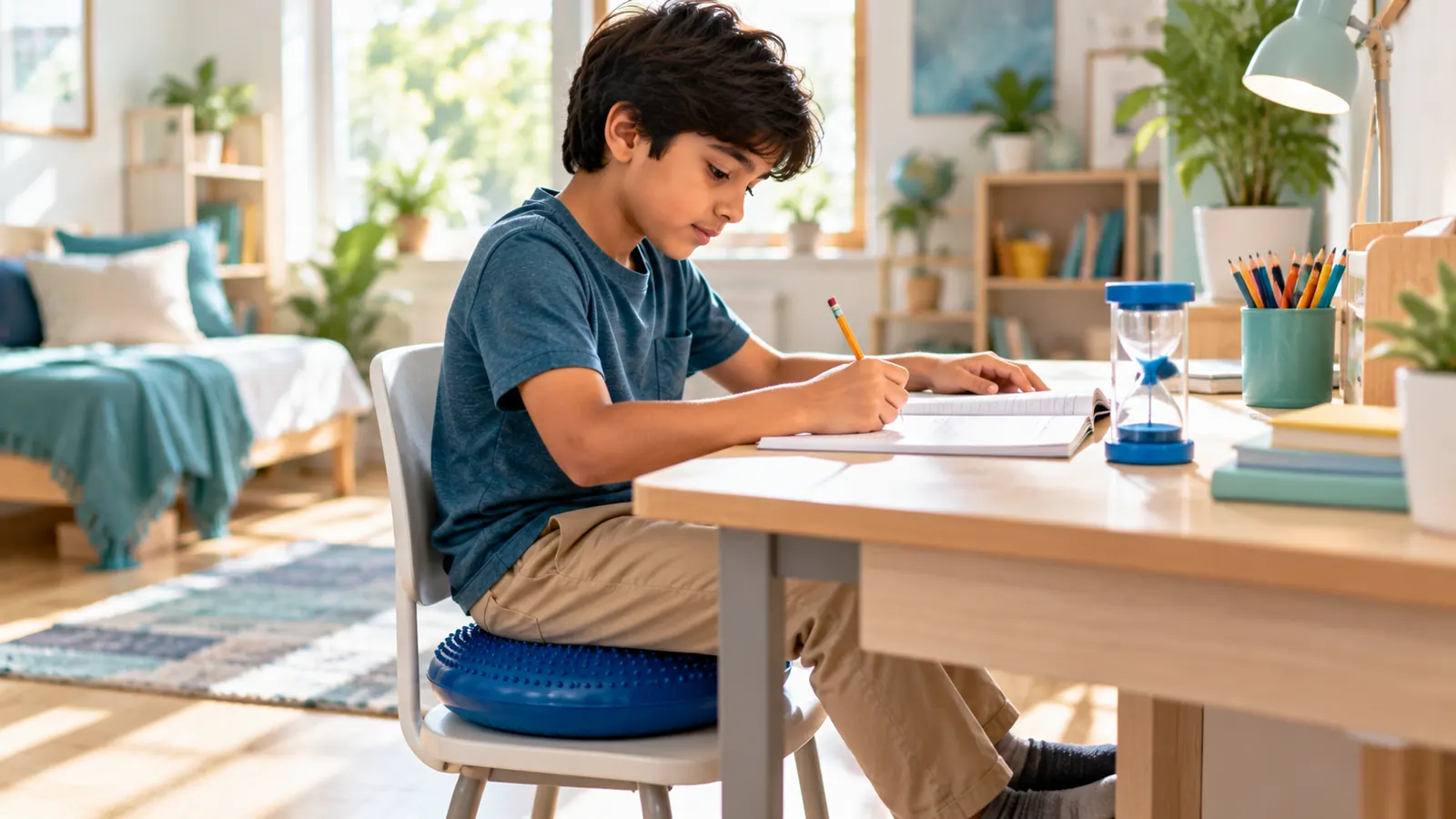
What is ADHD?
ADHD (attention-deficit/hyperactivity disorder) is a neurodevelopmental condition with persistent patterns of inattention, hyperactivity-impulsivity, or both, that interfere with daily functioning and development. Under the current diagnostic manual (DSM-5), several symptoms must be present before age 12, in more than one setting such as home and school. About 7 million US children (11.7%) aged 3–17 have a current ADHD diagnosis (CDC).
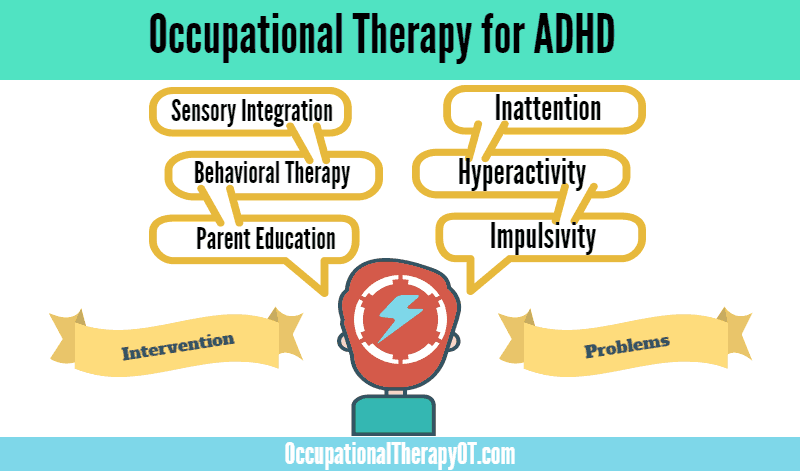
DSM-5 describes three presentations:
| Presentation | Main features |
|---|---|
| Predominantly inattentive | Mostly difficulty paying attention, organising and following through; may look dreamy or 'switched off' |
| Predominantly hyperactive-impulsive | Mostly restlessness, constant movement, acting without thinking and difficulty waiting |
| Combined | Significant symptoms of both |
Symptoms of ADHD
| Inattention | Hyperactivity | Impulsivity |
|---|---|---|
| Easily distracted; misses details; forgets things; frequently switches from one activity to another | Fidgets and squirms in their seat | Blurts out inappropriate comments, shows emotions without restraint and acts without regard for consequences |
| Has difficulty focusing on one thing; gets bored with a task after a few minutes unless it's enjoyable | Talks non-stop | Has difficulty waiting for things they want or for their turn in games |
| Struggles to organise and complete a task or learn something new | Dashes around, touching or playing with anything and everything in sight | Often interrupts conversations or others' activities |
| Has trouble completing or handing in homework; often loses pencils, toys and assignments | Has trouble sitting still at dinner, school and story time | Is impatient |
| Doesn't seem to listen when spoken to; struggles to follow instructions | Is constantly in motion | |
| Daydreams, becomes easily confused and moves slowly; processes information less quickly and accurately than others | Has difficulty doing quiet tasks or activities |
The brain and ADHD
Here is a simplified picture of what is happening in the developing brain of a child with ADHD.
One of the main areas involved is the prefrontal cortex, the part of the brain just above the eyes and behind the forehead. It is involved in attention, planning, decision-making and judgement. Differences in how this area develops and connects with other parts of the brain help explain why a child with ADHD finds it hard to concentrate, forgets things, switches between tasks, and acts before thinking through the consequences.
The prefrontal cortex is also responsible for executive functions, the brain’s management skills. Executive functions let us plan when several tasks have to be done, for example writing an exam answer paper or planning a study timetable. These are often affected in ADHD.
At a chemical level, the brain uses messengers such as dopamine and noradrenaline to pass information between nerve cells. In ADHD, these signalling systems work differently in the circuits that control attention and motivation. ADHD medicines, prescribed and monitored by a doctor, act on these systems. Stimulant medicines usually work within hours; non-stimulant medicines can take several weeks to reach their full effect.
The multimodal approach to ADHD
Children with ADHD struggle not only because of the core symptoms of inattention, hyperactivity and impulsivity, but because these symptoms disrupt normal developmental processes such as learning. This affects the child’s ability to take part fully in life around them.
The two main areas affected are academics and social behaviour. If unchecked, these lead to further problems with self-esteem, motivation, behaviour and mood, and a higher risk of anxiety, depression and substance misuse later.
To help effectively, keep these points in mind:
- One method is unlikely to be enough. The child has difficulties in a cluster of areas.
- Parents must actively take part, including understanding the child’s difficulties and strategies.
- Learning gaps build up over time. New learning builds on what was learned before, so if a child hasn’t mastered the Grade 3 syllabus, connecting to Grade 4 becomes even harder.
| Part of the plan | What it involves |
|---|---|
| Behavioural therapy | Building self-control and better responses to emotions through structured reinforcement (see behaviour modification below) |
| Parent education | Understanding ADHD and learning the behavioural and sensory strategies the OT uses, so they continue at home |
| Occupational therapy | Sensory regulation, organisation, motor skills, handwriting and daily routines |
| School support | An Individualised Education Program (IEP) or classroom accommodations |
| Medication | Considered by a doctor for many school-age children, alongside behavioural support |
The American Academy of Pediatrics (2019) recommends parent training in behaviour management first for preschoolers, and medication plus behavioural strategies for most school-age children and teens.
Change doesn’t happen overnight, and it is easy to lose track of progress. Building in time-bound progress checks is crucial. None of this works without a multidisciplinary team with clearly defined roles, a documented plan, and regular re-evaluation. This is why an Individualised Therapy Program (ITP) or Individualised Education Program (IEP) matters.
Occupational therapy for children with ADHD
Occupational therapy, often with sensory integration, is a vital part of this team, with a well-defined role, benefits and limitations. Occupational therapy helps the child overcome functional difficulties in daily life. Its areas include sitting tolerance, hyperactivity, restlessness, impulsivity, distractibility, fine motor control, grip, handwriting (form, shape, orientation and presentation), and eye-hand coordination.
ADHD symptoms stop children taking part in functional, meaningful tasks. Many children with ADHD also have sensory processing difficulties, which add to their difficulty paying attention and concentrating. They may withdraw from, or seek out, sensory stimulation such as movement, touch, bright lights, busy rooms and loud noises, and so not engage in an activity as expected. Many also struggle with daily tasks such as putting on and taking off a shirt, buttoning and unbuttoning, and other fine motor skills.
Occupational therapy assessment for ADHD
Before applying any sensory strategies, the OT assesses all sensory and functional issues. Generally, the OT checks:
| Area | What the OT looks at |
|---|---|
| Sensory processing | Defensiveness or seeking behaviour |
| Organisation | Organising belongings, tasks and time |
| Attention and impulsivity | Distractibility, following commands, waiting and turn-taking |
| Group participation | Joining organised group activities |
| Sitting tolerance | How long the child can stay seated and engaged |
| Motor coordination | Gross motor and fine motor coordination, handwriting |
| Visual skills | Visual memory and other visual perceptual skills |
Occupational therapy intervention for ADHD
Some OTs use only sensory integration techniques, and some use a functional approach. We prefer a multimodal approach that combines both.
Sensory techniques
Many children with ADHD have a lot of energy and hyperactivity, so the first goal is often to help them calm down. It is very important that they understand what we are saying and can follow instructions; if they are hyperactive and impulsive, they won’t be able to listen. Sensory integration techniques help calm them and channel their extra energy.
The activities below don’t suit every child; the right techniques depend on each child’s needs. Here is what an OT might do in a session.
| Calming the child | Channelling energy | |
|---|---|---|
| Arrival | Roll the child up in a mat and give deep pressure with a ball | Bouncing on a trampoline, combined with catching and throwing a ball |
| Environment | Light music, a scent such as lavender or vanilla, and dimmed lights | A large open space with climbing equipment |
| Movement | Wrist weights (as advised by the OT) and gentle, one-direction swinging on a bolster swing while doing an activity | Climbing the children's gym or ladder; running or cycling |
| Then | Sitting at the table for table-top and writing activities | Moving to focused table-top work once energy has been used |
Teaching organisation skills
Many parents and teachers ask how to teach organisation to a child with ADHD who throws things everywhere.
-
Encourage and support
These children are easily distracted and impatient; start with warmth, not correction.
-
Show it
Do the task yourself first so the child sees the correct sequence.
-
Few words
Demonstrate slowly with 2–3 meaningful words instead of long instructions, which distract.
-
Give time
Allow enough time for the child to think and respond.
-
Make it visual
A picture checklist on the wall or bag keeps the routine going.
Participation in activities
- Start with simple activities, to build self-esteem and confidence.
- Encourage sport. It improves self-confidence, self-discipline, social skills, motor development and concentration.
- Keep activities short at first, then lengthen them.
- Encourage the child to finish each task.
- Build in rest breaks, for example letting the child stand up and get a drink of water.
Restructuring the home or school environment
- Minimise visual and auditory distractions. Reduce clutter in the room and on the desk; avoid visually stimulating objects such as fancy balls on the desk.
- Restrict the visual field. Place the desk in a corner of the room, facing the corner.
- Use calm colours on the walls.
- Try soft, calming music. Many children respond well to it, though not all.
- Speak calmly and sit next to the child, giving verbal or physical cues if needed.
Behaviour modification for ADHD
Behaviour modification is a well-tried way to change habits and behaviour by increasing acceptable (wanted) behaviour and decreasing unacceptable behaviour. It is a key part of treating ADHD in children. It works mainly by encouraging good behaviour with praise or rewards, which works best when the reward follows the behaviour immediately. The other part is setting clear consequences for unwanted behaviour.
Depending on the child’s age, behaviour modification includes:
- Organising the day
- Setting boundaries and expectations
- Explaining instructions clearly
- Rewarding the child appropriately for good behaviour and completed tasks
- Making a calm, predictable plan for discipline
- Communicating regularly with the child’s teachers
- Setting a good example
- Being predictable
- Using behaviour charts
Remedial education and parent counselling are other parts of the wheel. Used together with medication when needed, as part of an individualised therapy or education program, they go a long way towards helping the child and family enjoy a fruitful, included life.
An example after-school routine
- 3:30 pm
- Snack and 15 minutes of active play or heavy work
- 4:00 pm
- Homework in a quiet corner, broken into 10-minute chunks with a timer
- A short movement break between chunks
- 5:00 pm
- Points on the behaviour chart for finished work; choose a privilege
- 7:30 pm
- Pack tomorrow's bag with the picture checklist
- Calming bedtime routine
Teaching and parenting tips for a child with ADHD
Children with ADHD, with or without hyperactivity, are easily distracted, fidgety and talkative. They may interrupt you while you’re explaining things to the class and find it hard to wait their turn. While they can disrupt the class, they may also need extra help with learning.
| Area | What helps |
|---|---|
| Relationship and structure | Be predictable, with a few clear rules and choices. Build a positive relationship with the child. |
| Learning | Encourage hands-on learning. Make learning fun with games, pictures and funny acronyms. Assign work that suits the child's skill level; they will avoid work that is too hard or too long. |
| Instructions | Provide visual reminders, such as key points left on the board. Check the child understood, and repeat directions together. Give enough time to work out an answer. |
| Breaking tasks down | Divide work into smaller units. For example, give the first five maths problems, then the next five, rather than all ten at once. Help the child correct their own mistakes. |
| Transitions | Prepare for transitions. Give plenty of notice and reminders before special events such as field trips. |
| Praise | Name the behaviour you liked: 'You finished your maths quietly and on time', rather than 'Thanks for not disturbing the class'. Praise immediately. |
| Rewards | Use privileges or activities rather than food or toys. Change rewards often, as children with ADHD get bored of the same one. Use a points or star chart as a visual reminder of success. |
| Consequences | Explain consequences in advance and apply them immediately and calmly, for example removing a privilege. Remove the child from situations that trigger the behaviour. |
| Escape valves | Allow a short errand, such as returning a book to the library, so the child can settle and come back ready to concentrate. |
| Hurdle help | Offer encouragement, a peer helper or extra materials before frustration builds. |
| Seating and environment | Go to where the child is when talking to them. Seat them near the teacher and a good role model, in a low-distraction area. Keep noise low. |
Remember that the child isn’t trying to forget their homework or fail a test. Having ADHD can be just as frustrating for the child as it is for the adults around them. Keeping this in mind makes it much easier to respond in positive, supportive ways, and to help the child channel their energy into the things they do well.
Related guides: Executive function skills, Sensory seeking behavior, Dyspraxia (DCD), Heavy work activities, Pediatric OT goals, Sensory diet for ADHD, OT for adults with ADHD, Self-regulation activities.
References
- Centers for Disease Control and Prevention. Data and statistics on ADHD.
- American Psychiatric Association. Diagnostic and Statistical Manual of Mental Disorders, 5th ed. (DSM-5). 2013.
- Wolraich ML, Hagan JF, Allan C, et al. Clinical practice guideline for the diagnosis, evaluation, and treatment of attention-deficit/hyperactivity disorder in children and adolescents. Pediatrics. 2019;144(4):e20192528.
- Creek J, Lougher L. Occupational Therapy and Mental Health. 4th ed. Churchill Livingstone; 2011.
- Wagenfeld A, Kaldenberg J. Foundations of Pediatric Practice for the Occupational Therapy Assistant. Slack; 2005.
- Hyche K, Maertz V. Classroom Strategies for Children with ADHD, Autism and Sensory Processing Disorders. PESI Publishing; 2014.
- Williams MS, Shellenberger S. How Does Your Engine Run? The Alert Program for Self-Regulation. TherapyWorks; 1994.
Frequently asked questions
How does occupational therapy help with ADHD?
Is occupational therapy good for ADHD?
What sensory activities help children with ADHD?
What is behaviour modification for ADHD?
How can teachers help a child with ADHD in the classroom?
Can adults with ADHD benefit from occupational therapy?
Written by
Deepam Pawar, OT
Deepam Pawar is an occupational therapist and co-founder of Occupational Therapy OT. He focuses on clinical frameworks, assessment, and evidence-based practice.
All articles by Deepam →This article is for general education and is not a substitute for individualized assessment or treatment by a licensed occupational therapist. Always seek the guidance of a qualified professional for specific concerns.