What Does an Occupational Therapist Do? Duties, Settings and a Day in the Life
What occupational therapists do: daily duties, work in hospitals, schools, mental health and home care, a day in the life, roles and how to become one.

What is an occupational therapist?
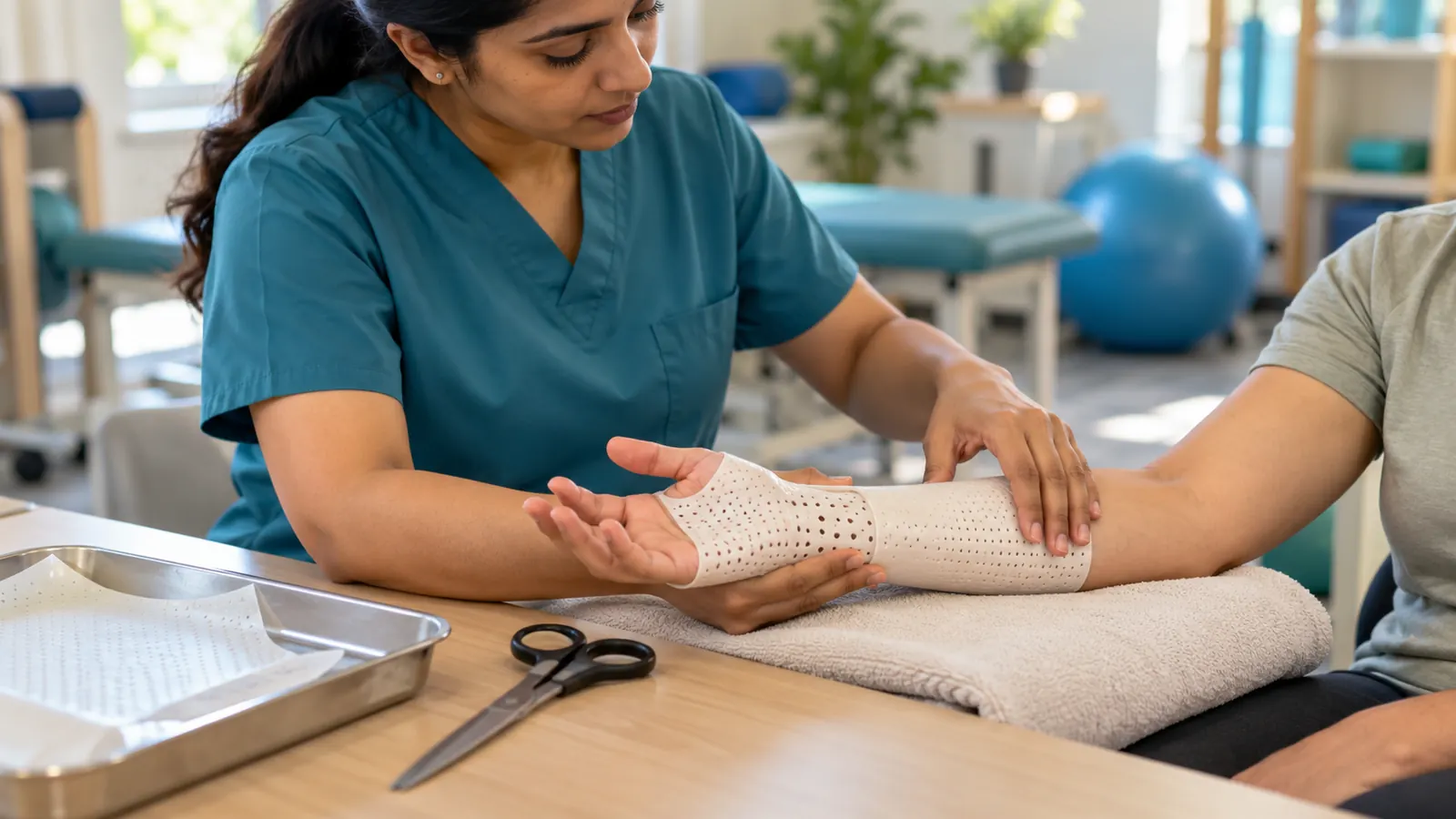
A professional who practises occupational therapy is an occupational therapist. When occupational therapists use the word occupation, they don’t mean a job. They mean any activity people engage in as part of daily life. If you’re new to the field, start with what is occupational therapy?
An occupational therapist uses meaningful activities to develop skills and promote independence. OTs provide direct and indirect services:
| Direct services | Indirect services |
|---|---|
| Evaluation and assessment | Consultation, e.g. advising a teacher on classroom seating |
| Intervention: therapy sessions, training, splinting, adaptive equipment | Training caregivers and staff (mediator training) |
| Re-evaluation and discharge planning | Program development, case management, education and advocacy |
What do occupational therapists do?
Occupational therapists work with all age groups, from newborns to older adults, in settings ranging from public hospitals to private schools.
- They assess the person and plan intervention according to their needs.
- They focus on the person’s current abilities, their active participation and how to make them independent in each area of life.
- They see the client as a whole, assess every area of life and then focus on specific areas of concern.
- They plan intervention goals that are purposeful, realistic and goal-oriented.
- They follow OT frames of reference to guide their practice.
- They work in a team with physicians, surgeons, physical therapists, speech therapists, orthotists, nurses, psychologists, teachers and families.
-
Listen
What does the person need and want to do?
-
Evaluate
Skills, barriers, environment and strengths.
-
Plan
Goals agreed with the person and family.
-
Treat
Activities, training, equipment and adaptations.
-
Review
Measure progress and adjust.
A day in the life of an occupational therapist
Here’s what a day might look like for an OT working in an inpatient rehabilitation unit.
- 8:00
- Morning ADL session: helps a man after a stroke practise one-handed dressing and shaving
- 9:30
- Team meeting with doctors, nurses, PT and speech therapy about patient progress and discharge dates
- 10:30
- Hand therapy session: fabricates a resting splint for a patient after a tendon repair
- 12:00
- Lunch group: practises feeding with adapted cutlery and social skills
- 13:30
- New evaluation: cognitive and functional assessment of a woman after a brain injury
- 15:00
- Kitchen session: safe meal preparation from a wheelchair
- 16:00
- Family training on safe transfers; orders a tub bench and raised toilet seat for home
- 17:00
- Documentation: evaluation reports, progress notes and the discharge plan
What occupational therapists do in different settings
| Setting | What the OT does |
|---|---|
| Acute care hospital | Works with neurological and orthopaedic patients soon after illness or surgery to prevent further deterioration and get them moving early, with the OTA. May recommend splints, bed exercises, discharge plans and home care advice. |
| Rehabilitation centre | Assesses and plans intervention to reduce dependence and promote independence: exercise, hand function, orthotic and prosthetic training, home modification, ADL training and more. |
| Mental health | Helps people live as independently as possible in the community: group therapy for social skills, stress management, building insight and coping strategies, and meaningful work and leisure. |
| Public and private schools | Supports children with conditions such as Down syndrome, autism, ADHD and learning disabilities: gross motor and fine motor activities, sensory strategies and handwriting. Read more: OT for children. |
| Home health | Visits clients at home, especially older adults and people who can't easily travel, after stroke, with dementia or with cerebral palsy, to build independence in their own environment. |
| College or university | Teaches OT students as a lecturer or professor, conducts research, supervises fieldwork and research projects, and may treat clients at an affiliated hospital or clinic. |
| Private practice | Runs their own therapy service in pediatrics, older adults, orthopaedics or neurorehabilitation, depending on their expertise and interests. |
| Other settings | Early intervention, nursing homes, hospice and palliative care, workplaces (ergonomics), driver rehabilitation and telehealth. |
The many roles of an occupational therapist
The job of an occupational therapist is to help the person achieve their maximum abilities in their life roles. To meet this goal, the OT helps the person sort out what they would like to achieve and provides the skills and encouragement needed to master their environment and reach full capacity. To do this, the occupational therapist takes on a variety of roles.
| Role | What it looks like |
|---|---|
| Teacher | Teaching is an integral part of OT. We teach a person something entirely new, how to do something they once could but no longer can, or how to do it in a new and different way. |
| Coach | A coach trains someone by instruction, demonstration and practice. The OT demonstrates a skill again and again, with repetition, until the person masters it. |
| Inventor | Every patient and every problem is different. When no device in the shop meets a need, the OT modifies one or makes something new. |
| Friend | A good bond lets the person share their problems, sorrow and pain. Good rapport is essential for effective treatment, and can lead naturally to counselling. |
| Leader | Like a boss in a business, the OT makes the important treatment planning decisions and puts them into action. |
| Motivator | When people become reluctant, avoid therapy or feel low, the OT motivates them, for example by sharing past experiences and realistic chances of improvement. |
| Critic | The OT analyses performance and gives feedback, always positively, to help the person reach their goals. |
| Health care professional | Above all, the OT is a health professional, combining knowledge of anatomy, physiology, kinesiology, psychology and sociology with therapeutic approaches. |
How to become an occupational therapist
An occupational therapist is a qualified professional. Each country sets its own minimum requirements, guided by the World Federation of Occupational Therapists and national associations.
-
Bachelor's degree
With prerequisite courses such as anatomy, physiology and psychology.
-
OT degree
From an ACOTE-accredited program, including Level I and Level II fieldwork.
-
NBCOT exam
Pass the national certification exam.
-
State licence
Apply for a licence in the state where you'll practise.
-
Keep learning
Continuing education and optional specialty certifications.
According to the US Bureau of Labor Statistics, occupational therapists earned a median of $100,330 in May 2025, and employment is projected to grow 15% from 2025 to 2035. Thinking about a shorter route into the field? Compare OT vs OTA, or read about becoming an occupational therapy assistant.
Summary
In this article, we’ve explained what occupational therapists do. People often ask: what’s an occupational therapist? What do they do? OTs evaluate, plan and treat, helping people of all ages regain independence in the activities of daily life, across many settings and in many roles. If you have a suggestion, another question or a better answer, let us know through our contact page.
Related guides: OT activities for stroke patients, OT activities for dementia, Pediatric OT goals.
References
- Punwar AJ, Peloquin SM. Occupational Therapy: Principles and Practice. 3rd ed. Lippincott Williams & Wilkins; 2000.
- American Occupational Therapy Association. Occupational Therapy Practice Framework: Domain and Process—Fourth Edition. 2020.
- US Bureau of Labor Statistics. Occupational Outlook Handbook: Occupational Therapists.
Frequently asked questions
What does an occupational therapist do on a daily basis?
What is the difference between direct and indirect OT services?
Where do occupational therapists work?
What qualifications does an occupational therapist need?
How much do occupational therapists earn?
Written by
Deepam Pawar, OT
Deepam Pawar is an occupational therapist and co-founder of Occupational Therapy OT. He focuses on clinical frameworks, assessment, and evidence-based practice.
All articles by Deepam →This article is for general education and is not a substitute for individualized assessment or treatment by a licensed occupational therapist. Always seek the guidance of a qualified professional for specific concerns.