Occupational Therapy for Autism: Assessment, Goals and Activities
How occupational therapy helps autistic children: assessment, sensory and daily-living goals, a real session example, activities and home strategies from an OT.


The role of occupational therapy in autism
Occupational therapy plays an important role in early intervention for autistic children. OT works to promote, maintain and develop the skills an autistic child needs to manage at home, in the community and beyond. Pediatric occupational therapists use a holistic approach, planning treatment for each child individually.
Many autistic children find it difficult to process and act on information received through the senses. This creates challenges in everyday tasks, and can show up as motor coordination difficulties, behavioural challenges, anxiety, learning difficulties and more.
Before we go further, it helps to understand autism and its features.
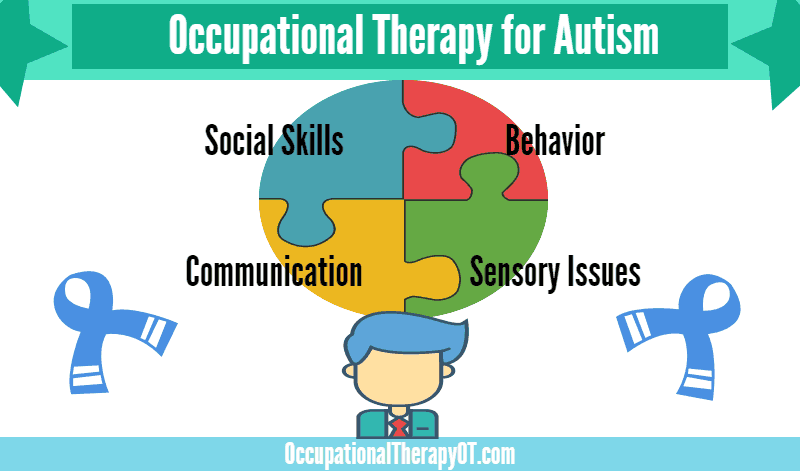
What is autism?
Autism is a neurodevelopmental condition: a difference in how the brain develops and works, starting in the early years. It is lifelong, with a very wide range of strengths and support needs. It is diagnosed by clinical observation and developmental history, not by a lab test.
Autism is not a single entity with a single cause. It describes a set of features that vary from mild to significant. Hence it is called autism spectrum disorder (ASD). About 1 in 31 eight-year-olds in the US has been identified with autism (CDC, 2025).
Autism can be complex to understand, for parents and professionals alike, because no two autistic children are the same.
Features of autism
Under the current diagnostic manual (DSM-5), autism is described in two main areas. The features are spread over a wide spectrum and vary from child to child.
| Area | What it can look like |
|---|---|
| Social communication and interaction | Different eye contact; difficulty relating to others, objects and events in expected ways; seeming to be in their own world; delayed speech, often single or double words at first; echolalia (repeating words or sentences); differences in gestures and back-and-forth conversation |
| Restricted and repetitive behaviours and interests | Strong need for routine and sameness; a narrow range of intense interests; repetitive movements such as hand flapping; less imaginative or pretend play |
| Sensory differences (part of the second area) | Unusual responses to sight, sound, touch, pain, smell and taste: over-reacting, under-reacting or seeking sensation |
Early signs to discuss with your doctor
Whom should you approach for help?
-
Notice and talk
Share concerns with your pediatrician. The AAP recommends autism screening for all children at 18 and 24 months.
-
Screening
Questionnaires such as the M-CHAT-R/F flag children who need a full evaluation.
-
Diagnosis
A developmental pediatrician, child neurologist, child psychiatrist or psychologist makes the diagnosis using DSM-5 criteria.
-
Support
Early intervention or school services, often including OT, speech therapy and education support. You don't need to wait for a diagnosis to start OT.
Autism is not an illness to be cured. With early support, many challenges become much easier, and the child can build functional ability and independence to the best of their ability, for a good quality of life.
What does an occupational therapist do for autistic children?
A pediatric occupational therapist helps the autistic child take part in activities of daily living (such as feeding, dressing and toileting), educational activities, play and social activities. OT services include assessment, intervention, and follow-up. Read more about what an occupational therapist does.
Occupational therapy assessment for autism
The occupational therapy assessment is designed to understand the child’s skills, strengths and difficulties. The occupational therapist uses many standardised and non-standardised tools to assess areas of difficulty.
Autistic children don’t always find formal testing easy. More often, the therapist relies on informal play observation and parent and teacher questionnaires to learn about the child’s developmental level, sensory-motor responses and functional abilities.
Common tools include:
- Sensory Profile 2 or the Sensory Processing Measure: questionnaires about sensory responses
- Childhood Autism Rating Scale (CARS-2): a rating of autism-related behaviours
- Developmental and motor tests such as the Peabody Developmental Motor Scales
- Daily-living assessments, such as the PEDI, and observation of eating, dressing and play
| Area the OT evaluates | Examples |
|---|---|
| Social skills | Eye contact, relationships with peers, interaction and turn-taking |
| Communication | Speech, echolalia, non-verbal communication and following instructions |
| Sensory processing | Sensory seeking, sensory defensiveness, balance |
| Behaviour | Repetitive movements such as hand flapping, reactions to changes in routine, following commands |
| Motor skills | Fine motor and gross motor skills, motor planning, handwriting |
| Daily living | Feeding (including food selectivity), dressing, toileting, sleep |
Occupational therapy interventions for autism
The occupational therapist helps the child respond to information coming through the senses and build skills for daily life. The plan may include sensory integration, motor development activities, and play activities that boost thinking and perception. The two approaches OTs use most often are sensory integration and behavioural strategies.
Sensory integration therapy for autism
Autistic children show a variety of sensory processing differences, often with patterns similar to those of children with dyspraxia (difficulty planning movement). The therapist uses activities that help the child register, modulate and act on sensory input. Some autistic children need more structure and support from the therapist to join in play than sensory integration usually involves.
OT strategies based on sensory integration can help an autistic child:
- Regulate their arousal (alertness) level
- Increase attention and decrease distractibility
- Reduce anxiety
- Reduce repetitive behaviours that get in the way of learning
- Improve performance in a variety of skills
Ayres Sensory Integration has the strongest research support of the sensory approaches for autistic children aged about 4–12 (Schaaf et al., 2018). See also sensory processing disorder.
Behavioural strategies for autism
Behaviour therapy, also called behaviour modification, improves specific behaviours or skills through structured use of reinforcement. When the desired behaviour is rewarded and an unwanted behaviour is calmly ignored or redirected, behaviour can gradually change. The therapist finds the rewards that are meaningful to the child, such as a favourite toy, activity or praise, and uses them to build new skills.
There is good evidence that behavioural approaches can help communication and social skills in autistic children. In OT, these strategies are built into play and daily routines, always with the aim of helping the child take part in activities that matter to them.
A real example: Ryan’s OT session
That formal explanation can be hard to picture, so here is an example.
Ryan, aged 4, is autistic. He was referred to occupational therapy to improve his functional motor skills, sensory difficulties and self-care skills. After evaluation, the main areas were: average intelligence, a short attention span, perseveration (getting stuck on one activity), resistance to transitions, limited social interaction, delayed speech and tactile defensiveness. The OT planned the intervention after discussing his parents’ main concerns.
- Start
- Welcome routine: shaking hands or saying 'hello'
- An attractive puzzle, with clapping or 'good job' as he completes it
- Sensory
- Firm touch and strong proprioceptive input to reduce tactile defensiveness, for example squeezing him gently between two mats
- Skill play
- Play that builds two-handed coordination and crossing the midline
- Positive reinforcement and variety, so he doesn't get stuck repeating one activity
- End
- Calming activity and a visual 'finished' cue to help the transition
- Home tip shared with his parents
Possible outcomes: after two months of regular therapy, Ryan may show less sensory defensiveness, cooperate more with others, respond to welcome gestures and pay attention for longer during play.
Problem 1Tactile defensiveness at mealtimes and dressing
GoalTo tolerate everyday textures
- Will join a 5-minute messy play activity with dry materials
- Will put on a long-sleeved top without distress, 4 days out of 5
Problem 2Short attention span in play
GoalTo increase attention during structured play
- Will complete a 4-piece puzzle with one verbal prompt
- Will stay with a table-top activity for 5 minutes
Problem 3Difficulty with transitions
GoalTo move between activities calmly
- Will follow a 3-step visual schedule
- Will change activity after a 2-minute warning, with no more than one prompt
Occupational therapy activities for autism
Occupational therapists use many activities to build function and reduce behaviours that get in the way. The activities are endless and depend on the therapist’s creativity.
| Goal | Activities |
|---|---|
| Proprioceptive and vestibular input | Push-pull games like tug of war; wheelbarrow walking; high-resistance play dough or therapy putty; climbing ropes or a dynamic ladder; theraband activities; swinging |
| Tactile tolerance | Sand play; sensory bins; finger painting; treasure hunts in putty (see tactile activities) |
| Daily living skills | Buttoning and unbuttoning; zipping and unzipping; shoe lacing; spoon and fork practice; toileting routines with visual steps |
| Social interaction | Group games such as musical chairs; dance; turn-taking board games; ball games with a partner |
| Regulation | A sensory diet; a calm-down corner; visual schedules and timers |
Occupational therapy at home for autism
Occupational therapy for children always works with parents or caregivers for better, more effective treatment. If a child has sensory processing difficulties, the OT teaches parents about a sensory diet: a planned and scheduled activity program. The OT also teaches parents how to start and finish therapy activities at home, which activities to choose, and which toys are worth buying.
Occupational therapists can also visit the home. Therapy at home has its own value, and early intervention services often include home visits. Many autistic children cooperate better in a familiar environment than in a new place, because they prefer not to break their routine.
The OT can also help parents childproof the home, and can use everyday household materials for activities. For example: play dough and plastic clips for fine motor work, a jump rope for gross motor and coordination, and a coat or blazer for buttoning practice.
Occupational therapy for autistic teens and adults
OT doesn’t stop in childhood. Occupational therapists help autistic teens and adults with independent living skills such as cooking and money, organising routines, managing sensory overload at school or work, driving, and finding workplace adjustments, such as a quieter desk or written instructions, that let them use their strengths.
Summary
The role of occupational therapy in autism is to provide early therapeutic support, so the child can build a sense of self, self-esteem, constructive play and social participation. The occupational therapist uses sensory integration, positive behavioural strategies and group therapy to help autistic children take part fully at home, at school and in the community.
Related guides: Interoception, Sensory overload, Sensory toys, Toe walking, OT goals for autism, Heavy work activities.
Theory behind this: the OT approaches in this guide draw on sensory integration, the behavioural frame and the developmental frame.
References
- Centers for Disease Control and Prevention. Data and statistics on autism spectrum disorder. 2025.
- Centers for Disease Control and Prevention. Signs and symptoms of autism spectrum disorder.
- American Occupational Therapy Association. The scope of occupational therapy services for individuals with an autism spectrum disorder across the life course. American Journal of Occupational Therapy. 2010;64(6 Suppl).
- Schaaf RC, Dumont RL, Arbesman M, May-Benson TA. Efficacy of occupational therapy using Ayres Sensory Integration: a systematic review. American Journal of Occupational Therapy. 2018;72(1).
- Yack E, Sutton S, Aquilla P. Building Bridges Through Sensory Integration. 2nd ed. Sensory Resources; 2002.
- Bloomer M, Rose C. Frames of reference: guiding treatment for children with autism. In: Developmental Disabilities: A Handbook for Occupational Therapists. Haworth Press.
- NICHD: Occupational therapy for autism
Frequently asked questions
How does occupational therapy help with autism?
What age should an autistic child start occupational therapy?
What does an OT session for autism look like?
What is the difference between OT and ABA for autism?
Can occupational therapy help autistic adults?
How many sessions of OT does an autistic child need?
Written by
Payal Mehta, OT
Payal Mehta is a practising occupational therapist and co-founder of Occupational Therapy OT. She writes on pediatrics, sensory integration, and mental-health practice.
All articles by Payal →This article is for general education and is not a substitute for individualized assessment or treatment by a licensed occupational therapist. Always seek the guidance of a qualified professional for specific concerns.