Early Intervention and Occupational Therapy: A Guide for Families
What early intervention is, who qualifies, how the US process works from referral to IFSP, and how occupational therapists help babies and toddlers.


What is early intervention?
The term early intervention means different things to different professionals. In this article, we discuss early intervention for the development of a child, and the role of occupational therapy within it.
Early refers to the critical period of a child’s development between birth and 3 years of age. Intervention refers to a treatment program designed to improve or maintain the child’s development.
Early intervention is very effective for children at high risk of developmental delay. Its goal is to prevent or reduce physical, cognitive, social and emotional delays caused by biological risk factors (such as low birth weight or fetal alcohol syndrome) or environmental risk factors (such as neglect or homelessness).
Who is eligible for early intervention?
An early diagnosis helps a child get early intervention services. Conditions that generally need early intervention include cerebral palsy, Down syndrome, autism and spina bifida. But it isn’t limited to these: a child with a developmental delay from any genetic, chromosomal or neurological cause, or after trauma, also needs early intervention. Many children qualify on the basis of delay alone, before any diagnosis.
In the US, each state runs its early intervention program under the Individuals with Disabilities Education Act (IDEA) Part C, and sets its own definition of delay.
How early intervention works in the US
-
Referral
Parents, doctors or childcare staff contact the state program. No diagnosis is needed.
-
Evaluation
A free, multidisciplinary evaluation of all areas of development.
-
IFSP
An Individualized Family Service Plan sets outcomes and services, usually within 45 days of referral.
-
Services
Delivered in natural environments such as the home or childcare. The plan is reviewed every 6 months.
-
Transition at 3
Planning for preschool special education (an IEP) or other community services.
The early intervention team
Early intervention isn’t limited to occupational therapy; each professional has a role. The family’s role is especially important, and the occupational therapist must collaborate with the family and the other professionals to give the best service. Team members work together to deliver the range of services needed: medical care, nursing, physical therapy, occupational therapy, speech therapy and special instruction.
The role of occupational therapy in early intervention
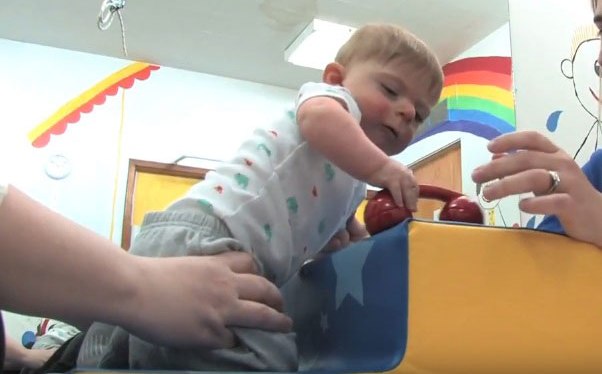
Occupational therapy is considered a primary service for young children who need early support. The OT helps with the child’s functional needs.
The role of the occupational therapist is to help infants, toddlers and their families function independently (Case-Smith, 1989). Young children achieve independence for their developmental age through assessment and intervention in motor control, sensory modulation, adaptive coping, sensorimotor development, social-emotional development, daily living skills and play (Gorga, 1989). Read more: occupational therapy for children.
Occupational therapy evaluation and assessment
Evaluation means gathering and interpreting information about the child’s age, health status, medical history, current developmental level and family support, to maximise the child’s development. The OT evaluates many developmental areas and identifies the areas of difficulty: motor, sensory, perception, cognition, communication, social and emotional skills.
The therapist may assess informally by watching the child play with parents, or choose from a variety of standardised assessments, such as:
- Bayley Scales of Infant and Toddler Development
- Erhardt Developmental Prehension Assessment
- Hawaii Early Learning Profile (HELP)
- Assessment, Evaluation and Programming System (AEPS)
- Infant/Toddler Sensory Profile
| Area | What the OT looks at |
|---|---|
| Motor | Muscle tone, associated movements, balance and coordination, range of motion, posture |
| Sensory processing | Low sensory registration, sensation seeking, sensation avoiding, attention span |
| Daily living | Feeding, dressing, toileting |
| Social | Social smile, eye contact, play with others |
| Behaviour | Regulation, irritability, response to routines |
The OT assessment should identify the child’s current abilities, strengths and needs, to reach the desired developmental outcomes.
Goals and outcomes
The occupational therapist on the early intervention team focuses on outcomes from a family-centred perspective. Goals usually target gross motor and fine motor skills and everyday routines, and must be set after discussion with the family. A good outcome reads like real life: “Maya will sit on the floor to play with her brother” rather than “improve trunk control”.
Occupational therapy intervention in early intervention
Occupational therapists promote a child’s independence and self-confidence in their physical, emotional and psychosocial development. Early intervention OT is marked by engagement in meaningful occupations of the child and family, in their natural environment.
A family-centred approach
In this approach, the occupational therapist involves family members in the intervention, guides caregivers on how involved they will be, and teaches functional activities to the family. Activities should target behaviours and skills the child can carry into daily routines at home, in childcare and in the community. The therapist also supports families by listening to them and giving positive feedback on their parenting.
Areas of intervention
| Area | What OT does |
|---|---|
| Motor skills | Gross motor skills such as independent sitting, standing and walking come first; fine motor skills such as grasp and release and in-hand manipulation follow. The OT designs creative strategies with caregivers. |
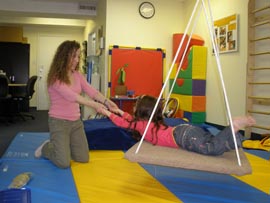
| Sensory processing | For babies who are irritable, cry often, are hard to comfort or struggle with changes in routine, the OT uses touch, movement and body-position input that helps the child organise and respond. |
| Self-care | Feeding, dressing and toileting. If self-care is limited by motor or sensory issues, the OT guides the family, adapts the environment, and suggests aids such as a modified spoon. |
| Play | Exploratory, creative and competitive play refines movement and thinking. Everyday materials at home, such as sand, plastic containers and spoons, are the focus. |
| Adaptive equipment | Custom seating can improve sitting posture and eating for children with multiple disabilities. The OT advises on seating inserts and wheelchairs and trains the family to use them. |
Summary
Occupational therapy is an integral part of the early intervention team. Occupational therapists use holistic approaches with children, and their main goal is independence. OT in early intervention considers the sensory, motor, social and cognitive aspects of performance, always working alongside the family. For babies specifically, see occupational therapy for infants and toddlers.
Related guides: Primitive reflexes, Toe walking, Oral motor activities for toddlers.
References
- Hopkins HL, Smith HD, eds. Willard and Spackman’s Occupational Therapy. 8th ed. J.B. Lippincott.
- Case-Smith J, O’Brien JC. Occupational Therapy for Children. 6th ed. Mosby.
- Kramer P, Hinojosa J. Frames of Reference for Pediatric Occupational Therapy. 3rd ed. Lippincott Williams & Wilkins.
- U.S. Department of Education. Individuals with Disabilities Education Act (IDEA), Part C: Early Intervention Program for Infants and Toddlers with Disabilities.
- Centers for Disease Control and Prevention. CDC’s developmental milestones.
Frequently asked questions
What is early intervention?
Who qualifies for early intervention?
How do I get early intervention for my child?
What does an occupational therapist do in early intervention?
What happens to early intervention services at age 3?
Is early intervention really effective?
Written by
Payal Mehta, OT
Payal Mehta is a practising occupational therapist and co-founder of Occupational Therapy OT. She writes on pediatrics, sensory integration, and mental-health practice.
All articles by Payal →This article is for general education and is not a substitute for individualized assessment or treatment by a licensed occupational therapist. Always seek the guidance of a qualified professional for specific concerns.