Sensory Toys: An OT's Guide to Choosing the Right Toy for Your Child's Needs
How to choose sensory toys by need: calming, alerting, touch, movement, oral and visual. OT-recommended ideas by age, plus key safety tips.

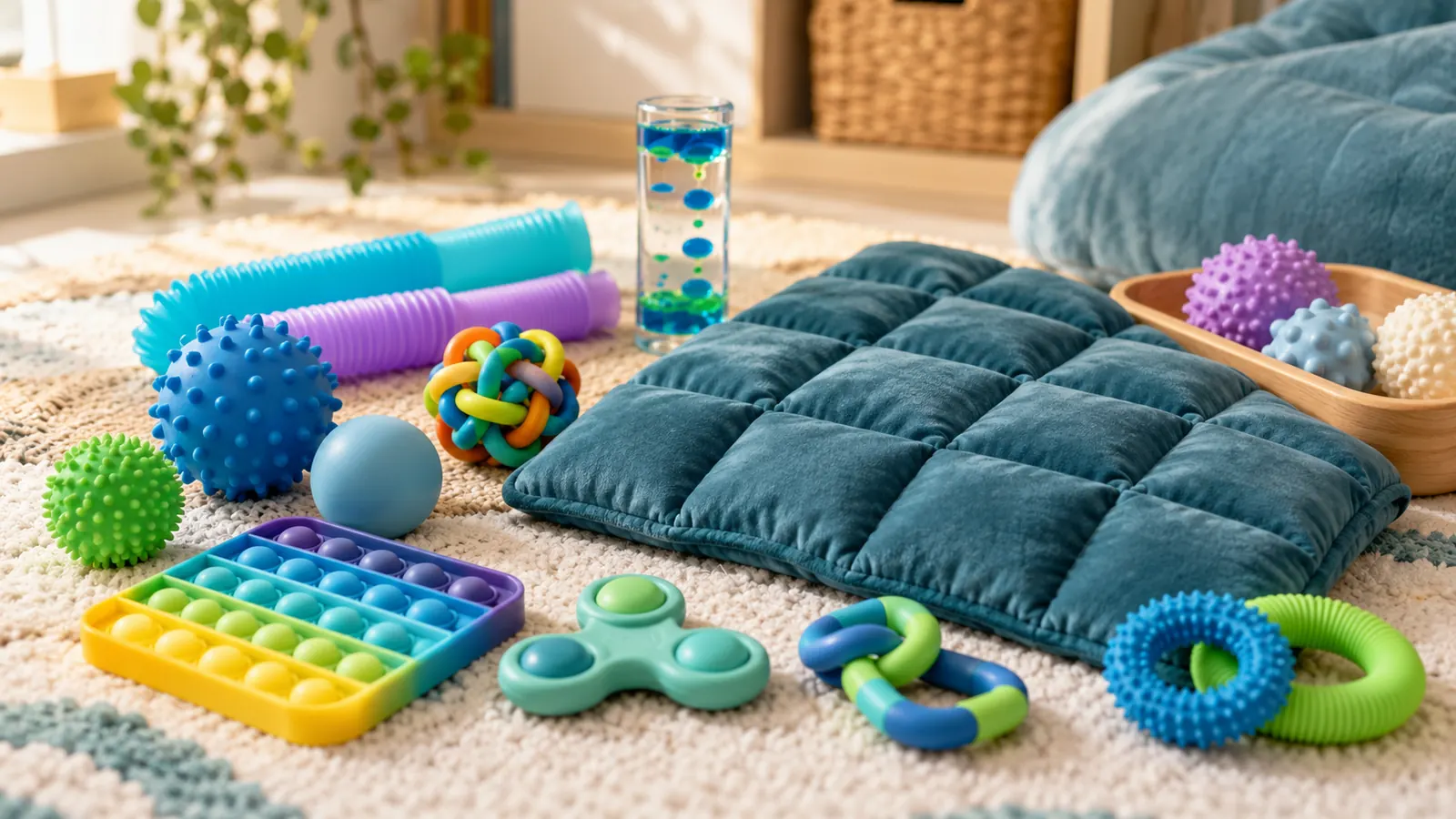
Search for “sensory toys” and you’ll find thousands of products: fidget spinners, pop tubes, chewy necklaces, liquid timers, crash pads. But which ones actually help your child? As occupational therapists, the first question we ask isn’t “which toy?” but “what does your child’s body need?”
Start with your child’s sensory needs
Every child processes sensory information differently. Some seek more input and are always moving, touching or chewing. Others are easily overwhelmed by noise, touch or busy places. Many children are a mix, and needs change through the day. Read more about sensory processing, sensory seeking and sensory overload.
-
To calm down
- Overwhelmed, anxious or upset
- Covers ears, hides
- Hard to settle for sleep
Calming toys: deep pressure, slow rhythm, quiet
-
To wake up and focus
- Sluggish, slouched, daydreaming
- Hard to get going
Alerting toys: movement, crunchy, cold, bright
-
To meet a seeking need
- Crashing, spinning, chewing, touching everything
Safe input of the same type: heavy work, chewies, fidgets
Sensory toys by sensory system
Most children need a mix. Read more about the sensory systems.
| Sensory system | Toy ideas | Good for |
|---|---|---|
| Touch (tactile) | Therapy putty, kinetic sand, sensory bins, textured balls, squishies, fidget toys | Exploring textures; calming hands; desensitising touch |
| Pressure and heavy work (proprioceptive) | Crash pads, resistance bands, body socks, hand grippers, heavy push toys | Calming and organising; seekers who crash and push |
| Movement (vestibular) | Wobble cushions, balance boards, therapy balls, sit-and-spin, indoor swings | Alerting or calming depending on speed; children who need to move |
| Oral | Chewy tubes, chew necklaces, vibrating oral tools, whistles, blow toys, sports water bottles | Children who chew clothes or pencils; oral seekers |
| Visual | Liquid motion timers, sensory bottles, light-up toys, visual timers | Calming focus; transitions; waiting |
| Hearing (auditory) | Noise-cancelling ear defenders, rain sticks, musical instruments, white noise | Children sensitive to noise; calming routines |
| Interoception | Breathing buddies, feelings cards, bubble wands | Building body awareness and calm breathing |
Sensory toys by age
| Age | Ideas |
|---|---|
| 0–12 months | High-contrast books, rattles, soft textured toys, teething rings, activity gyms, mirrors |
| 1–3 years | Stacking cups, water and sand play, large textured balls, push toys, musical instruments, chunky shape sorters |
| 3–6 years | Playdough, kinetic sand, sensory bins, balance stepping stones, scooter boards, ear defenders, wobble cushions |
| 6–12 years | Fidgets with clear rules, therapy putty, resistance bands for chairs, crash pads, balance boards, chewy pencil toppers |
| Teens and adults | Discreet fidgets, stress balls, weighted lap pads (with OT advice), noise-cancelling headphones, textured rings |
Making sensory toys work
- Have a purpose: choose toys to meet a specific need, not just because they’re popular.
- Build them into routines: for example, a wobble cushion for homework time or a fidget for car journeys, as part of a sensory diet.
- Agree rules for fidgets at school: the fidget stays in hands, quiet, and doesn’t become a game.
- Rotate toys so they stay interesting.
- Watch the effect: is your child calmer, more focused or happier afterwards? If not, try something else.
How occupational therapy helps
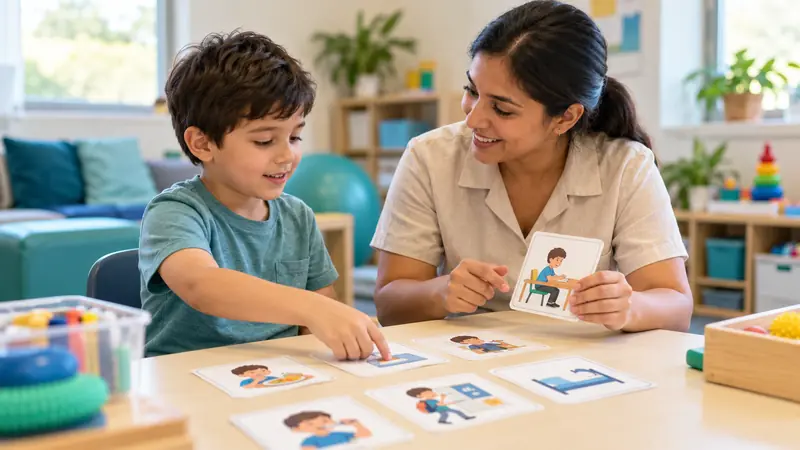
An occupational therapist assesses your child’s sensory preferences, often with the Sensory Profile 2 and observation, and recommends specific toys and tools that suit them. The OT also explains when and how to use each one, builds them into a sensory diet, and helps adapt home and school. Read more about OT for autism and OT for ADHD.
Summary
Sensory toys can help children calm down, stay alert, focus and meet sensory needs safely, but the right toy depends on the child. Start with your child’s sensory needs, build toys into daily routines, keep safety in mind, and ask an occupational therapist for personalised advice.
References
- Dunn W. Sensory Profile 2. Pearson; 2014.
- US Consumer Product Safety Commission (cpsc.gov). Safety warnings on high-powered magnets, button batteries and water beads.
- American Academy of Pediatrics. HealthyChildren.org: Choosing safe toys for toddlers and preschoolers.
- Bundy AC, Lane SJ, eds. Sensory Integration: Theory and Practice. 3rd ed. F.A. Davis.
Frequently asked questions
What are sensory toys?
What are the best sensory toys for autism?
Are sensory toys good for ADHD?
What sensory toys are good for babies and toddlers?
Are weighted blankets safe for children?
Written by
Deepam Pawar, OT
Deepam Pawar is an occupational therapist and co-founder of Occupational Therapy OT. He focuses on clinical frameworks, assessment, and evidence-based practice.
All articles by Deepam →This article is for general education and is not a substitute for individualized assessment or treatment by a licensed occupational therapist. Always seek the guidance of a qualified professional for specific concerns.