Occupational Therapy Goals for Autism: 40+ Examples (Neurodiversity-Affirming)
OT goals for autistic children: how to write respectful, functional goals, plus 40+ examples for sensory, self-care, feeding, play and school.

Occupational therapists help many autistic children and their families with sensory needs, daily routines, play and school. Setting the right goals is the foundation of good therapy. This page explains how to write respectful, functional OT goals for autistic children, with 40+ examples you can adapt.
For background on how OT helps, read occupational therapy for autism. For goal-writing formats like SMART and COAST, see our pediatric OT goals guide.
Principles for autism goals
| Instead of… | Try… | Why |
|---|---|---|
| "Will stop hand-flapping." | "Will use a movement break card to ask for a break when their body needs to move." | Stimming is often regulating; meet the need rather than suppress it. |
| "Will make eye contact for 5 seconds." | "Will show attention to a peer's turn in a game by looking at the game board or responding." | Forced eye contact is uncomfortable for many autistic people. |
| "Will tolerate loud noise without reacting." | "Will put on ear defenders independently when the classroom is noisy." | Accommodations are a valid way to participate. |
| "Will play appropriately." | "Will share a play activity with a peer for 5 minutes, using their preferred interest." | Interests are a strength and a bridge to connection. |
Sensory and self-regulation goals
| Focus | Example goal |
|---|---|
| Noticing body states | Will identify how their body feels (calm, wiggly, upset) using a 3-picture chart when asked, on 4 of 5 check-ins, within 8 weeks. |
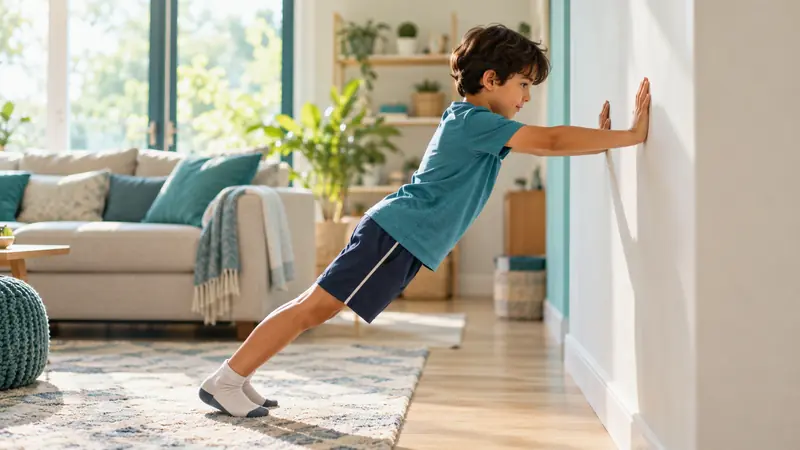
| Choosing strategies | Will choose a regulation strategy from a visual menu (squeeze ball, wall push-ups, headphones, quiet corner) when upset, with one prompt, on 3 of 4 occasions, within 10 weeks. |
| Requesting a break | Will request a break using a break card or AAC device before becoming overwhelmed, on 3 of 5 observed occasions, within 10 weeks. |
| Noise | Will put on noise-cancelling headphones independently when entering the cafeteria, on 4 of 5 days, within 6 weeks. |
| Planned input | Will complete 3 scheduled heavy work or movement breaks per school day with a visual schedule, on 4 of 5 days, within 6 weeks. |
| Interoception | Will notice and act on a body signal (thirst, needing the toilet) when prompted by a visual check-in, on 3 of 5 check-ins, within 10 weeks. See interoception. |
| Tooth-brushing tolerance | Will tolerate tooth-brushing for 1 minute using a graded plan (own brush, preferred toothpaste, visual timer), within 12 weeks. |
| Haircuts | Will sit for a 5-minute trim using headphones and a visual countdown, with a preparation story, within 3 months. |
Read more: sensory overload, sensory diet and sensory seeking.
Self-care goals
| Area | Example goal |
|---|---|
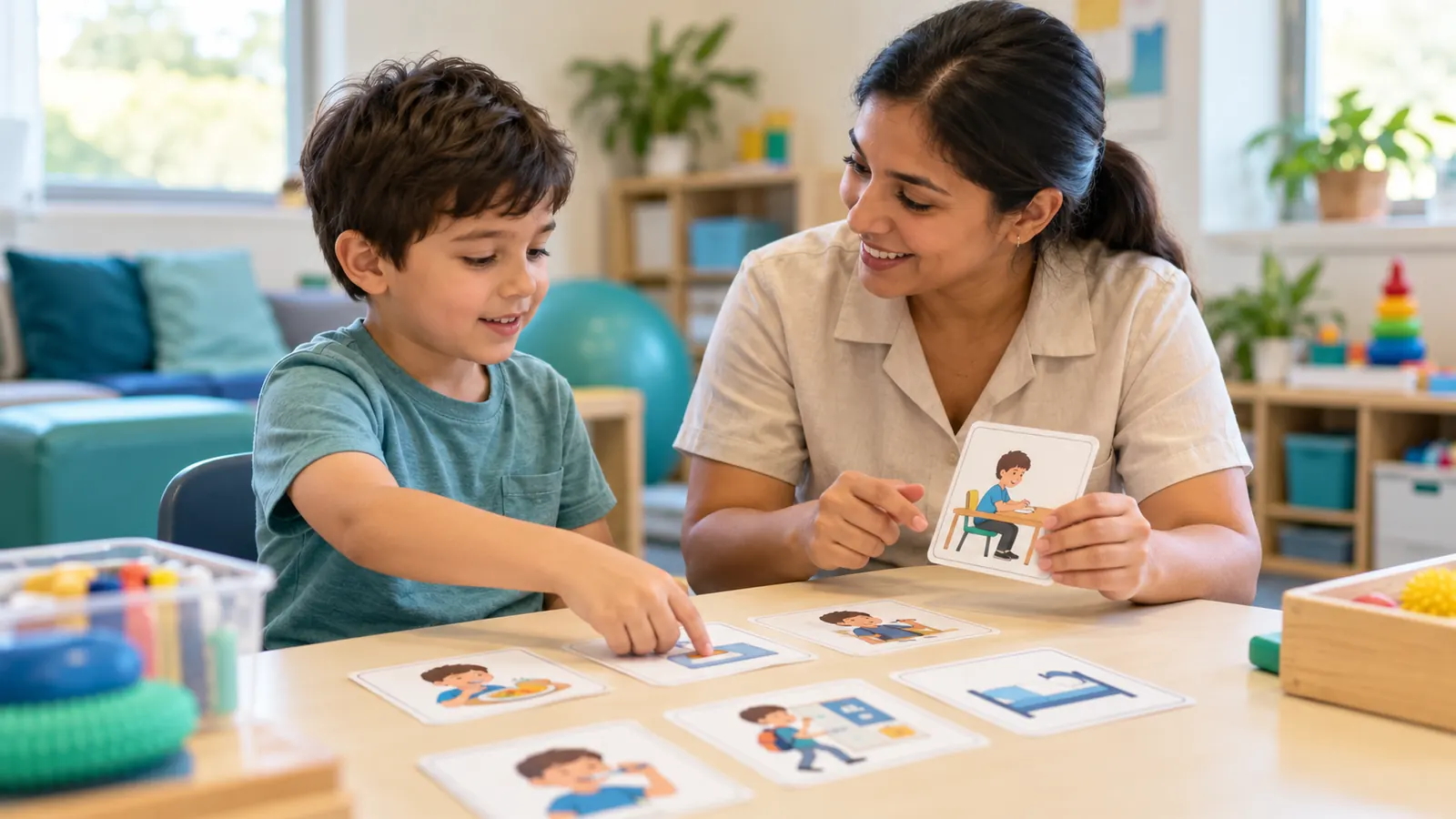
| Dressing | Will put on a T-shirt independently using a picture sequence on 4 of 5 mornings, within 8 weeks. |
| Dressing (clothing preferences) | Will choose between 2 comfortable outfits laid out the night before and dress with one prompt, within 6 weeks. |
| Shoes | Will put on Velcro shoes on the correct feet independently on 4 of 5 opportunities, within 6 weeks. |
| Toileting | Will follow a 6-step visual toileting sequence with no more than 2 prompts, within 12 weeks. |
| Handwashing | Will wash and dry hands using a visual sequence independently on 4 of 5 opportunities, within 6 weeks. |
| Bathing | Will tolerate hair washing using a visor and a 'first–then' board, on 3 of 4 bath times, within 8 weeks. |
Feeding goals
Many autistic children have a limited range of foods because of sensory differences. OT feeding goals focus on comfort and gradual exploration, never forcing.
Problem 1Eats fewer than 15 foods
GoalWill explore 1 new food per week through looking, touching or smelling (no requirement to eat), within 12 weeks.
- Tolerates a new food on a separate plate nearby
- Touches or smells a new food during a play-based food activity
Problem 2Difficulty using cutlery
GoalWill use a fork to spear soft foods independently at 3 of 4 meals, within 8 weeks.
- Uses an adapted fork with a thicker handle
- Practises spearing during play with playdough 'food'
Play and social participation goals
| Focus | Example goal |
|---|---|
| Shared play | Will play alongside a peer with a shared toy (e.g. train track) for 5 minutes with adult support, within 8 weeks. |
| Turn-taking | Will take 3 turns in a simple game using a visual 'my turn/your turn' card, within 8 weeks. |
| Using interests | Will share their preferred interest with a peer through a joint activity (e.g. building a dinosaur world) for 10 minutes, within 10 weeks. |
| Flexibility in play | Will accept a peer's idea in play once per session with a visual choice board, within 10 weeks. |
| Playground | Will join a structured playground game (e.g. tag with clear rules) for 5 minutes with adult support, within one term. |
School participation goals
| Focus | Example goal |
|---|---|
| Transitions | Will move from a preferred activity to the next task using a visual timer and schedule, with no more than 1 prompt, on 4 of 5 transitions, within 8 weeks. |
| Classroom routines | Will complete the arrival routine using a picture checklist independently on 4 of 5 days, within 6 weeks. |
| Handwriting | Will write their first name legibly with correct letter formation on 4 of 5 trials, within 12 weeks. See handwriting. |
| Scissors | Will cut along a straight line within ½ inch on 4 of 5 trials, within 10 weeks. See cutting activities. |
| Seating | Will remain at a table activity for 10 minutes using a wobble cushion or movement breaks, on 4 of 5 opportunities, within 8 weeks. |
Self-advocacy goals for older children and teens
- Will tell a teacher, in their preferred way, one accommodation that helps them (e.g. headphones, breaks, written instructions), within one term.
- Will use a phone reminder or planner to manage 3 daily tasks independently, within 8 weeks.
- Will plan and cook a simple meal with a visual recipe, with adult supervision, within 12 weeks.
Summary
The best OT goals for autistic children support comfort, independence, participation and self-advocacy, and respect autistic ways of being. Choose 3–5 goals that matter most to the child and family, make them measurable, and review them regularly. Read more about executive function and sensory toys.
Related guides: Self-regulation activities.
Theory behind this: the OT approaches in this guide draw on the behavioural frame, sensory integration and the acquisitional frame.
References
- Case-Smith J, O’Brien JC. Occupational Therapy for Children and Adolescents. Elsevier.
- American Occupational Therapy Association. Occupational therapy practice guidelines for individuals with autism spectrum disorder. AOTA Press.
- Dallman AR, Williams KL, Villa L. Neurodiversity-affirming practices are a moral imperative for occupational therapy. Open Journal of Occupational Therapy. 2022;10(2):1–9.
- Gateley CA, Borcherding S. Documentation Manual for Occupational Therapy. SLACK.
Frequently asked questions
What are common occupational therapy goals for autism?
What is a neurodiversity-affirming OT goal?
Should OT goals target stimming or eye contact?
How many OT goals should an autistic child have?
What are examples of sensory goals for autism?
Written by
Payal Mehta, OT
Payal Mehta is a practising occupational therapist and co-founder of Occupational Therapy OT. She writes on pediatrics, sensory integration, and mental-health practice.
All articles by Payal →This article is for general education and is not a substitute for individualized assessment or treatment by a licensed occupational therapist. Always seek the guidance of a qualified professional for specific concerns.