Trigger Finger Exercises and Occupational Therapy: Splints, Stretches and Tips
How OT and hand therapy treat trigger finger: splinting, tendon gliding exercises, activity changes, the evidence, and when injection or surgery helps.

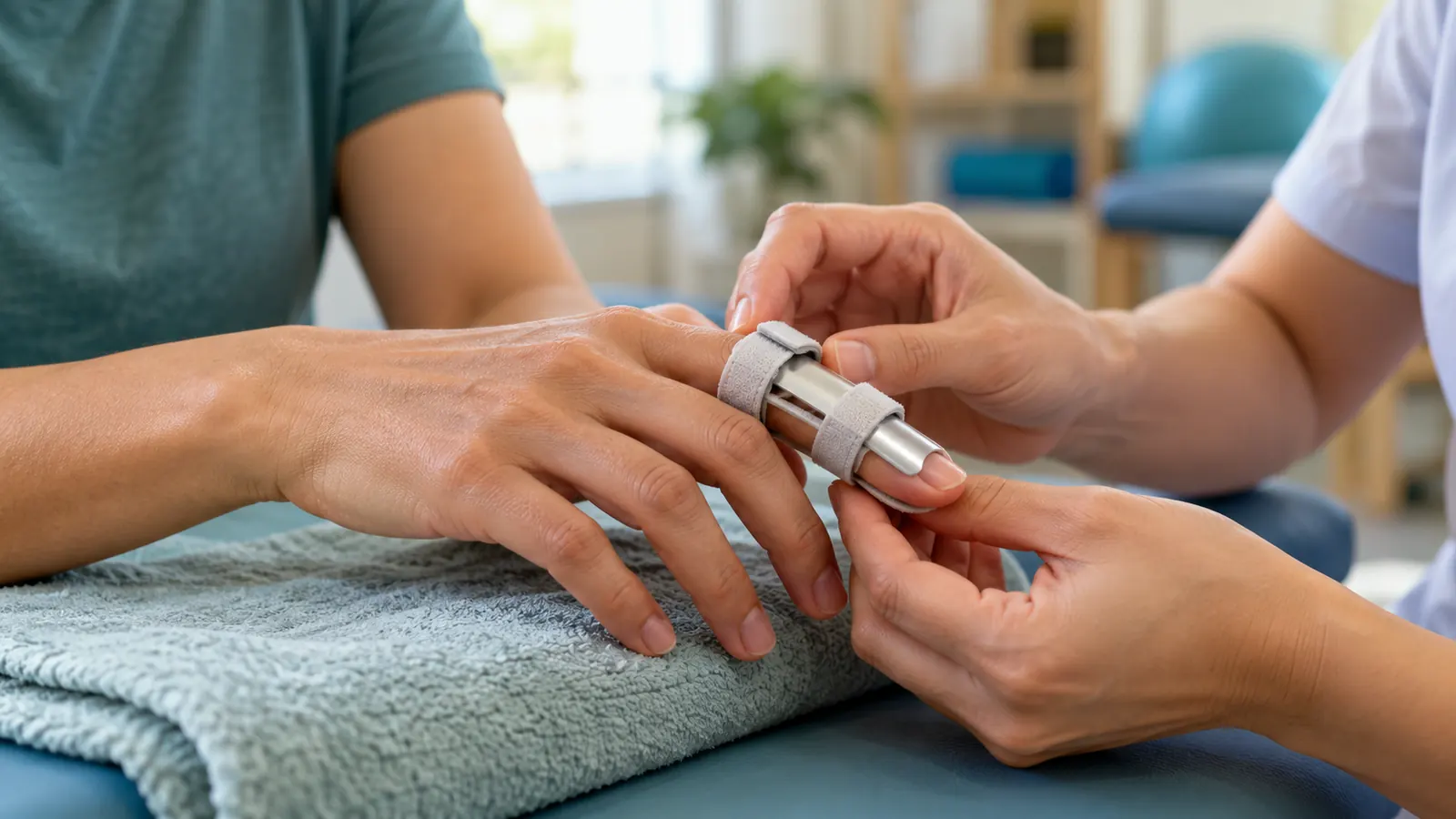
A finger that clicks, catches or gets stuck bent, then suddenly snaps straight, is a classic sign of trigger finger. It can be painful and frustrating, especially for people who use their hands a lot at work or home. Occupational therapists, particularly those specialising in hand therapy, play a key role in treatment.
What is trigger finger?
Each finger has tendons that slide through a tunnel-like sheath. In trigger finger (stenosing tenosynovitis), the tendon or sheath becomes thickened and inflamed, usually at the base of the finger. The tendon catches as it moves, causing:
- clicking or popping when bending the finger
- the finger getting stuck bent, then snapping straight
- pain or a tender lump at the base of the finger, in the palm
- stiffness, often worse in the morning
It’s more common in people with diabetes or rheumatoid arthritis, in women, in people aged 40–60, and in those whose work or hobbies involve repeated strong gripping. The ring finger and thumb are most often affected.
Stages of trigger finger
Most severe ↑
-
Fixed4
The finger is stuck and can't be straightened, even with help.
-
Locked, can be straightened with the other hand3
Needs help to straighten.
-
Catching, straightens on its own2
Clicks or catches, but you can straighten it yourself.
-
Pain and tenderness only1
No catching yet.
Mildest
Splinting and exercises work best in the earlier stages.
How occupational therapy helps
1. Splinting (orthosis)
A splint rests the tendon so the inflammation can settle. Systematic reviews in the Journal of Hand Therapy found that splinting improved triggering, pain and hand function. The most commonly studied design is an MCP blocking splint, a small splint that holds the knuckle at the base of the finger straight while leaving the other finger joints free to move. Splints are usually worn for about 6 weeks or more, often during the day and sometimes at night, as your therapist advises.
2. Gentle exercises
-
Straight hand
Fingers straight and together.
-
Hook fist
Bend the finger tips down, knuckles straight.
-
Tabletop
Bend at the knuckles, fingers straight.
-
Straight fist
Bend the knuckles and middle joints, finger tips straight.
-
Full fist
Make a gentle full fist.
| Exercise | How to do it | Tip |
|---|---|---|
| Tendon glides | Move slowly through the 5 positions above | 5–10 times, a few times a day, if pain-free |
| Finger extension stretch | Rest the hand flat on a table and gently lift and straighten each finger | Hold for a few seconds |
| Passive straightening | Use the other hand to gently straighten the affected finger | Never force or snap it |
| Warm water movement | Gently open and close the hand in warm water | Helps morning stiffness |
Follow your therapist's plan. Stop any exercise that causes sharp pain or triggering.
3. Changing daily activities
| Instead of… | Try… |
|---|---|
| Gripping tools tightly for long periods | Padded or larger handles; take short breaks every 20–30 minutes |
| Carrying heavy bags by the fingers | Carry over the forearm or shoulder, or use a trolley |
| Repeated pinching (scissors, garden shears) | Spring-loaded tools that open by themselves |
| Wringing cloths | Press water out with the flat of the hand |
| Pushing through pain | Pace tasks and alternate hands |
Other treatments from your doctor
- Steroid injection into the tendon sheath is often effective and can be combined with splinting.
- Trigger finger release surgery may be offered if the finger stays locked or symptoms don’t improve. Hand therapy afterwards helps restore movement and reduce scar stiffness.
Summary
Trigger finger causes catching, locking and pain when the finger tendon can’t glide smoothly. Occupational and hand therapy treat it with splinting (especially an MCP blocking splint), gentle tendon gliding exercises and changes to daily activities, with good evidence for splinting. If symptoms persist, a doctor may offer an injection or surgery. Read more about the biomechanical frame of reference, the rehabilitative frame of reference, adaptive equipment and OT activities for stroke patients.
References
- Lunsford D, Valdes K, Hengy S. Conservative management of trigger finger: a systematic review. Journal of Hand Therapy.
- Leong Y, et al. Orthotic intervention options to non-surgically manage adult and pediatric trigger finger: a systematic review. 2023. PubMed.
- American Academy of Orthopaedic Surgeons (OrthoInfo). Trigger finger.
- American Society of Hand Therapists. Trigger finger patient information.
Frequently asked questions
What exercises help trigger finger?
Does a splint help trigger finger?
Can occupational therapy fix trigger finger?
What should I avoid with trigger finger?
When is surgery needed for trigger finger?
Written by
Deepam Pawar, OT
Deepam Pawar is an occupational therapist and co-founder of Occupational Therapy OT. He focuses on clinical frameworks, assessment, and evidence-based practice.
All articles by Deepam →This article is for general education and is not a substitute for individualized assessment or treatment by a licensed occupational therapist. Always seek the guidance of a qualified professional for specific concerns.