Oral Motor Activities for Toddlers: Feeding, Chewing and Drooling (OT Guide)
What oral motor skills are, feeding milestones, signs of difficulty, and 25 safe oral motor activities for toddlers for chewing, drinking and drooling.

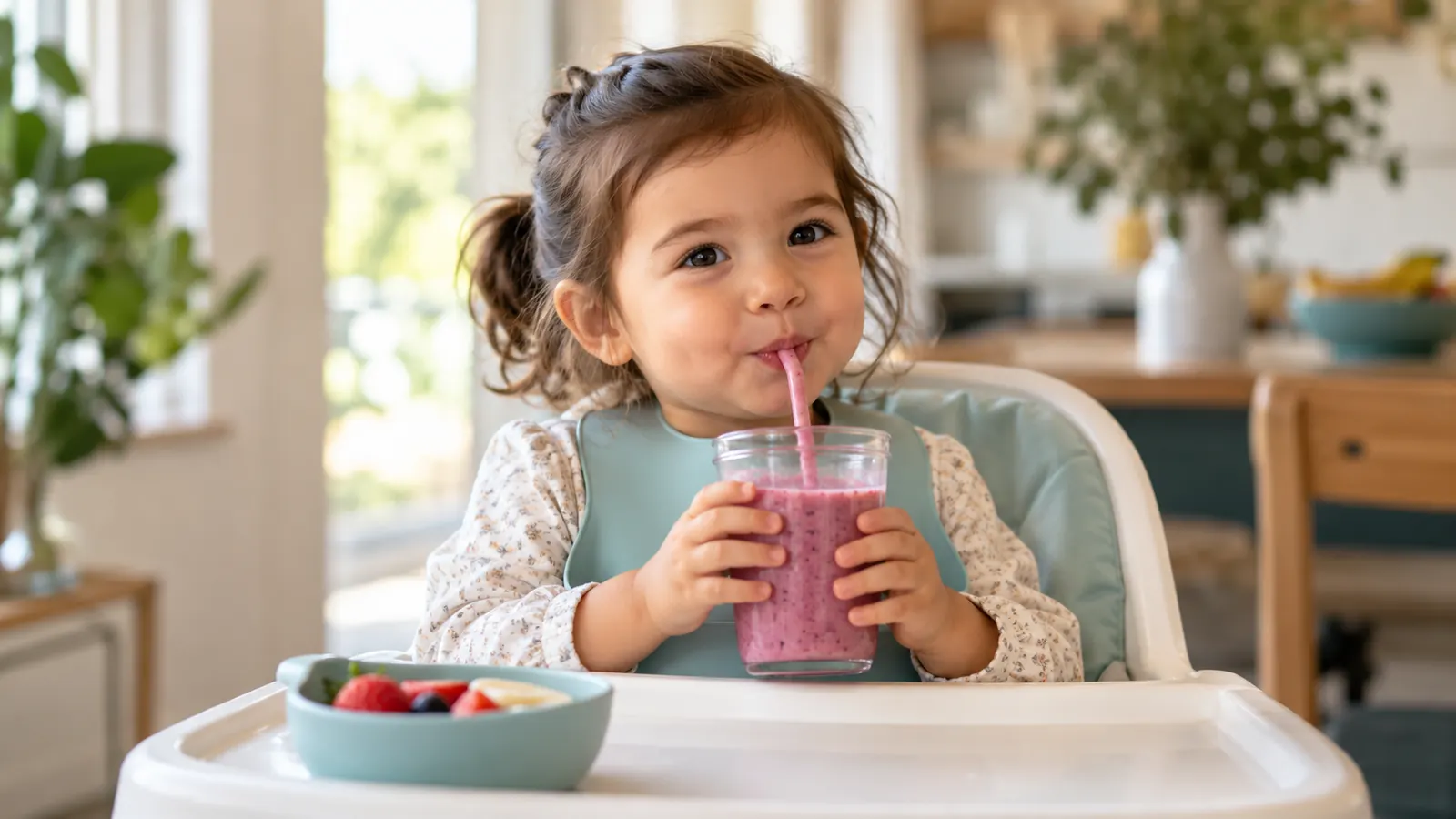
Watching a toddler learn to eat is a messy adventure. Behind every chewed carrot and straw sip are oral motor skills: how the lips, tongue, jaw and cheeks work together. When these skills are slow to develop, meals can become stressful. This guide explains what to look for and gives safe, playful activities to try.
What are oral motor skills?
Oral motor skills are the movements of the lips, tongue, jaw and cheeks used for:
- sucking, biting and chewing food
- moving food around the mouth and forming it for swallowing
- drinking from a cup and a straw
- keeping the lips closed and managing saliva
Feeding milestones
- About 6 months
- Starts solids with smooth or mashed foods
- Opens mouth for the spoon
- About 7–9 months
- Moves food from side to side with the tongue
- Begins munching soft lumps
- Picks up finger foods
- About 9–12 months
- Chews soft finger foods
- Sips from an open cup with help
- About 12–18 months
- Eats most family foods cut small
- Drinks from a straw and open cup
- Uses a rotary (circular) chew
- About 2 years
- Chews a wide range of textures
- Drooling mostly stops except when teething or concentrating
Ages vary between children and depend on experience with different foods.
Signs of oral motor difficulties
- Gagging, coughing or choking with lumpy or chewy foods
- Only accepting smooth foods well past 12–18 months
- Swallowing food whole without chewing
- “Pocketing” food in the cheeks
- Lots of food or drink falling out of the mouth
- Heavy drooling beyond about age 2–3
- Difficulty drinking from a cup or straw
- Very long mealtimes or tiring quickly when eating
Oral motor difficulties are more common in children with low muscle tone, Down syndrome, cerebral palsy, prematurity and autism (where sensory preferences also play a role).
25 oral motor activities for toddlers
| Activity | What it builds |
|---|---|
| 1. Drinking through a short straw | Lip closure, sucking |
| 2. Thicker drinks through a straw (smoothies, yoghurt drinks) | Stronger suck |
| 3. Silly straws (for older toddlers) | Sustained suck |
| 4. Sipping from an open cup | Lip control |
| 5. Blowing bubbles | Lip rounding, breath control |
| 6. Blowing cotton balls or pom-poms across a table | Lip rounding |
| 7. Blowing whistles or party blowers | Lip seal |
| 8. Blowing paint through a straw onto paper | Fun art |
| 9. Blowing feathers or tissues | Gentle, controlled breath |
| 10. Mirror faces: kisses, smiles, puffed cheeks | Imitation and awareness |
| Activity | Tip |
|---|---|
| 11. Meltable crunchy foods (puffs, baby crackers) | Safe early chewing |
| 12. Soft finger foods placed on the side molars | Encourages side chewing |
| 13. Chewy foods for older toddlers (bagels, dried fruit cut small) | Jaw strength |
| 14. Long strips of soft-cooked vegetables | Bite and chew practice |
| 15. Teething toys and chewy tubes | Safe chewing input |
| 16. Bite-and-snap games with crackers | Controlled biting |
| 17. Mixed textures gradually (e.g. yoghurt with soft fruit pieces) | Texture tolerance |
| 18. Family meals together | Modelling chewing |
| Activity | How |
|---|---|
| 19. Lick yoghurt or jam off the lips | Tongue moves up, down and side to side |
| 20. Lick a lollipop or ice lolly held to the side | Tongue lateralisation (older toddlers) |
| 21. Pop a Cheerio off the lip | Lip and tongue control |
| 22. Animal sounds and silly noises | Lip and tongue movement in play |
| 23. Kissing a mirror or a toy | Lip rounding |
| 24. Vibrating toothbrush (if tolerated) | Oral awareness |
| 25. Tooth-brushing songs | Daily oral input |
Tips for mealtimes
- Seat your toddler upright with feet supported (a footrest on the high chair helps)
- Offer new textures in small steps, next to familiar foods
- Eat together so they can watch you chew
- Keep mealtimes relaxed; don’t force bites
- Gently pat (don’t wipe) the chin to build awareness of drooling
How OT and speech therapy help
Occupational therapists look at posture, sensory preferences, hand-to-mouth skills and the mealtime routine. Speech-language pathologists assess swallowing and oral movements for eating and speech. Many feeding teams include both, plus a dietitian and doctor. Read more about OT for infants and toddlers and sensory processing.
Summary
Oral motor skills develop through eating and drinking a widening range of textures. Playful straw, blowing, chewing and tongue games can help, alongside relaxed, supported mealtimes. Watch for red flags like choking, poor growth or ongoing heavy drooling, and seek a feeding assessment if you’re concerned.
References
- Lof GL, Watson MM. A nationwide survey of nonspeech oral motor exercise use: implications for evidence-based practice. Language, Speech, and Hearing Services in Schools. 2008;39(3):392–407.
- McCauley RJ, Strand E, Lof GL, Schooling T, Frymark T. Evidence-based systematic review: effects of nonspeech oral motor exercises on speech. American Journal of Speech-Language Pathology. 2009;18(4):343–360.
- Centers for Disease Control and Prevention. Infant and toddler nutrition: choking hazards.
- Case-Smith J, O’Brien JC. Occupational Therapy for Children and Adolescents. Elsevier.
Frequently asked questions
What are oral motor activities?
What are signs of oral motor problems in toddlers?
Do oral motor exercises help speech?
How can I help my toddler stop drooling?
Who helps with toddler feeding and oral motor skills?
Written by
Payal Mehta, OT
Payal Mehta is a practising occupational therapist and co-founder of Occupational Therapy OT. She writes on pediatrics, sensory integration, and mental-health practice.
All articles by Payal →This article is for general education and is not a substitute for individualized assessment or treatment by a licensed occupational therapist. Always seek the guidance of a qualified professional for specific concerns.