Hand Strengthening Activities for Kids: 40 OT Ideas for Better Grip and Writing
Why hand strength matters for writing, cutting and self-care, signs of weak hands, and 40 OT hand strengthening activities for kids of all ages.

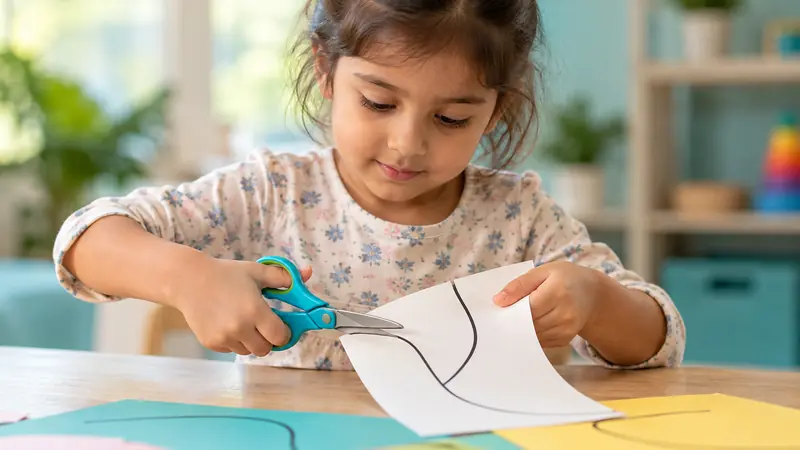
Does your child tire quickly when writing, struggle to open their lunchbox, or press so lightly you can barely see their drawing? Their hands may need more strength. Hand strength is one of the quiet building blocks behind handwriting, cutting and self-care.
Why hand strength matters
| Area | Tasks that need hand strength |
|---|---|
| School | Holding a pencil, writing for longer, cutting, using glue sticks and staplers |
| Self-care | Buttons, zips, opening containers and packets, using a knife and fork, squeezing toothpaste |
| Play | Building with Lego, playdough, climbing, ball games |
Strength starts from the body
Fine control ↑
-
Fingers and thumb
Pinching, precise control, in-hand manipulation
-
Hand arches and grip
Squeezing, gripping, opening and closing
-
Wrist stability
A steady wrist for writing and cutting
-
Shoulder stability
A stable shoulder lets the hand move freely
-
Core strength
A strong trunk for posture and balance
Foundation
If the core and shoulders are weak, the hand works harder. Build from the bottom up.
Signs of weak hands
- Tires quickly with writing, colouring or cutting
- Uses a fisted or awkward pencil grasp after about age 5
- Presses very lightly, or very hard to compensate
- Struggles with lids, packets, buttons and zips
- Avoids fine motor activities like Lego, playdough or puzzles
- Shakes out their hand or complains it hurts when writing
40 hand strengthening activities
| Activity | Tip |
|---|---|
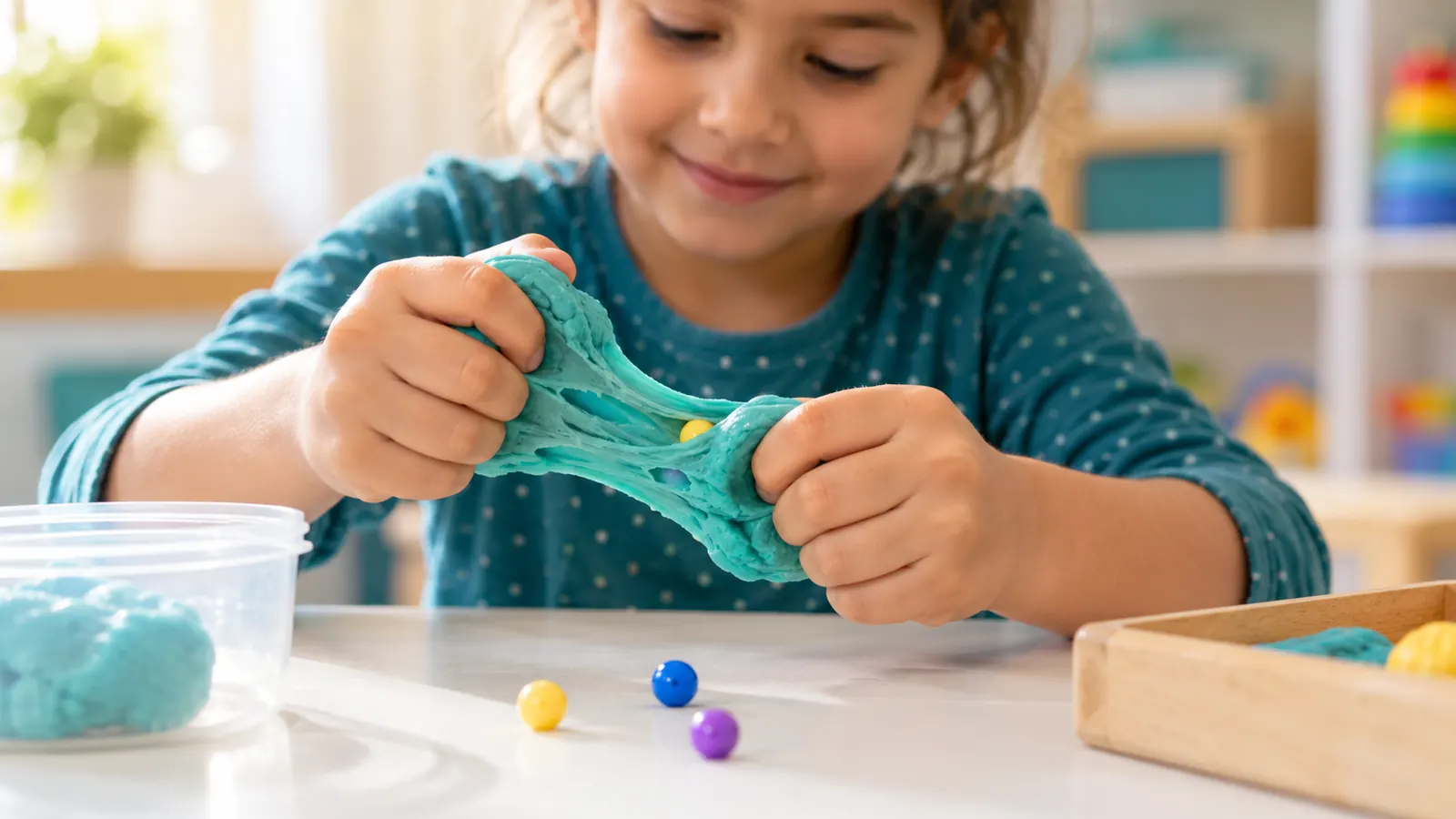
| 1. Playdough squishing, rolling and pinching | Hide beads to find |
| 2. Therapy putty | Choose the right resistance with an OT |
| 3. Spray bottles | Water plants or 'paint' a fence with water |
| 4. Squeezing sponges in the bath | Fill and squeeze into a cup |
| 5. Squeeze toys and stress balls | Count squeezes |
| 6. Turkey baster or pipette races | Move water between cups |
| 7. Squeezing glue bottles | Make glue art |
| 8. Squeezing icing bags when baking | Real-life fun |
| 9. Wringing out cloths | After wiping the table |
| 10. Squeezing tennis balls with a 'mouth' cut in | Feed it pom-poms |
| Activity | Tip |
|---|---|
| 11. Clothes pegs on a box or card | Clip on, clip off |
| 12. Tongs to move pom-poms | Sort by colour |
| 13. Tweezers to pick up small items | Supervise small objects |
| 14. Popping bubble wrap | Thumb and index finger |
| 15. Picking up coins and posting them | Supervise for under-3s |
| 16. Hole punch confetti | Strong pinch |
| 17. Peeling stickers | Lift with fingertips |
| 18. Pegboard games | Push pegs into foam or holes |
| 19. Lite-Brite style toys | Push pegs in |
| 20. Picking up beans or pasta to fill a jar | Use fingertips |
| Activity | Tip |
|---|---|
| 21. Pulling apart Lego or Duplo | Build, then pull apart |
| 22. Tearing paper for collage | Small pieces need more control |
| 23. Pop tubes | Pull and push |
| 24. Pulling elastic bands onto a tube or geoboard | Stretch shapes |
| 25. Opening and closing containers | Lids, jars, zip bags |
| 26. Pulling scarves out of a tissue box | Toddler favourite |
| 27. Kneading bread or pizza dough | Real cooking |
| 28. Rolling dough with a rolling pin | Both hands |
| 29. Pushing golf tees into playdough | Then hammer them |
| 30. Tug of war with a towel | Whole-arm strength |
| Activity | Tip |
|---|---|
| 31. Climbing frames and monkey bars | Grip and shoulder strength |
| 32. Wheelbarrow walking | Shoulder stability |
| 33. Animal walks (bear, crab) | Weight through the hands |
| 34. Wall push-ups | 10 slow pushes |
| 35. Drawing on a vertical easel or wall | Wrist extension |
| 36. Tummy-lying for drawing and puzzles | Shoulder strength |
| 37. Digging in sand or soil | Use a small spade |
| 38. Squeezing water out of a soaked pom-pom | Water play |
| 39. Using a manual pencil sharpener | Twist and grip |
| 40. Rock climbing walls | Supervised |
How occupational therapy helps
An occupational therapist can measure grip and pinch strength, look at posture, grasp and coordination, and design a program that builds strength through play. The OT may also suggest adapted tools, like pencil grips, spring-loaded scissors or thicker cutlery, while strength develops. Read more about fine motor skills.
Summary
Hand strength supports writing, cutting and everyday self-care. Build it from the body up, with playful squeezing, pinching, pulling and climbing activities, little and often. If your child still struggles, ask an OT for an assessment.
Related guides: Trigger finger exercises.
References
- Case-Smith J, O’Brien JC. Occupational Therapy for Children and Adolescents. Elsevier.
- Henderson A, Pehoski C, eds. Hand Function in the Child: Foundations for Remediation. 2nd ed. Mosby.
- NHS Borders Children’s Occupational Therapy. Hand strengthening activities.
Frequently asked questions
How can I strengthen my child's hands?
What are signs of weak hands in children?
Do hand strength exercises improve handwriting?
What are hand strengthening activities for toddlers?
How long should hand strengthening activities take?
Written by
Payal Mehta, OT
Payal Mehta is a practising occupational therapist and co-founder of Occupational Therapy OT. She writes on pediatrics, sensory integration, and mental-health practice.
All articles by Payal →This article is for general education and is not a substitute for individualized assessment or treatment by a licensed occupational therapist. Always seek the guidance of a qualified professional for specific concerns.