Visual Perceptual Skills: Types, Signs of Difficulty and OT Activities
What visual perceptual skills are, the 7 types like figure-ground and form constancy, how they affect reading and writing, and OT activities to build them.

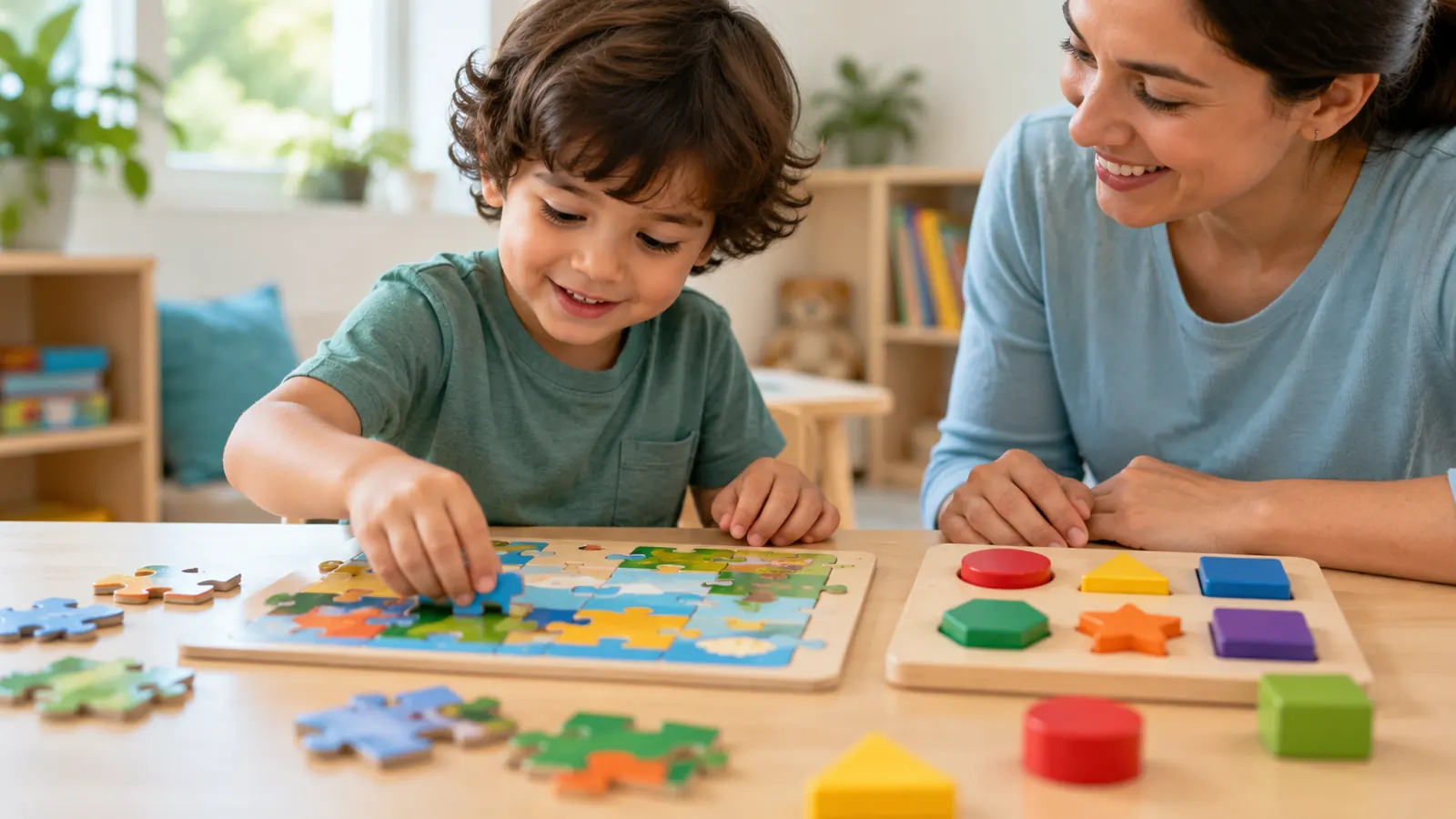
Your child may have perfect eyesight but still struggle to copy from the board, find their shoes in a cluttered cupboard, or keep their place when reading. The reason can be visual perception: how the brain makes sense of what the eyes see.
What are visual perceptual skills?
Visual perceptual skills are the brain’s ability to interpret, organise and remember visual information. They help us recognise letters and numbers, judge distances, find objects, read maps and copy shapes.
The 7 main types of visual perceptual skills
| Skill | What it means | Everyday example |
|---|---|---|
| Visual discrimination | Noticing similarities and differences between shapes, letters or objects | Telling b from d, or 3 from 8 |
| Visual memory | Remembering what you've seen | Remembering how a word is spelled after seeing it |
| Visual spatial relations | Understanding the position of objects relative to each other and yourself | Spacing words on a page; knowing left from right |
| Form constancy | Recognising a shape even when it changes size, colour or angle | Reading letters in different fonts or handwriting |
| Visual sequential memory | Remembering things in the right order | Copying a phone number or spelling a word correctly |
| Visual figure-ground | Picking out an object from a busy background | Finding a sock in a messy drawer; finding a word on a crowded worksheet |
| Visual closure | Recognising an object when only part of it is visible | Reading quickly; recognising a partly hidden toy |
These are the areas measured by the Test of Visual Perceptual Skills, 4th edition (TVPS-4).
Closely linked skills include visual-motor integration (the eyes guiding the hand, as in copying shapes) and visual attention and scanning.
How visual perception affects daily life
| Area | Possible difficulties |
|---|---|
| Reading | Losing place, skipping lines, confusing similar letters and words |
| Handwriting | Poor spacing and sizing, letters off the line, reversals, difficulty copying from the board |
| Maths | Lining up numbers in columns, reading graphs, understanding shapes |
| Self-care | Getting dressed (finding armholes, front and back), finding items in a drawer |
| Play and sport | Puzzles, building, catching a ball, judging distances |
| Getting around | Getting lost, bumping into things, difficulty with stairs or curbs |
Signs to look out for
- Frequent letter or number reversals after about age 7
- Difficulty copying from the board or a book
- Avoids puzzles, mazes, dot-to-dots or drawing
- Struggles to find things on a busy page or in a cluttered space
- Messy layout and spacing in written work
- Tires quickly with reading or visual tasks
- Difficulty with left and right
These difficulties can occur alongside dyspraxia (DCD), ADHD, autism, learning disabilities, prematurity or brain injury, or on their own.
Activities to build visual perceptual skills
| Skill | Games and activities |
|---|---|
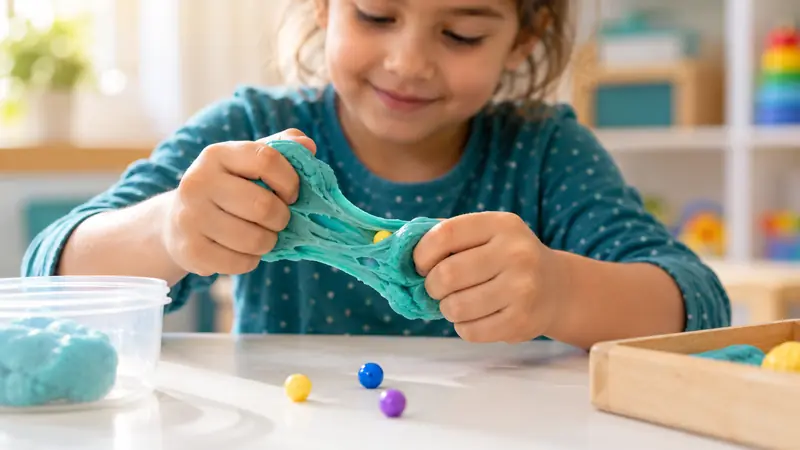
| Visual discrimination | Spot-the-difference, matching games, sorting buttons or beads by shape and colour, letter and number bingo |
| Visual memory | Memory card games, Kim's game (look at items, cover them, one removed: what's missing?) |
| Spatial relations | Lego or block building from pictures, tangrams, obstacle courses with positional words (over, under, beside) |
| Form constancy | Finding shapes in the environment, matching letters in different fonts, shape sorters |
| Sequential memory | Copying bead patterns, Simon games, repeating a sequence of pictures |
| Figure-ground | I Spy, Where's Wally / Where's Waldo, hidden pictures, word searches |
| Visual closure | Dot-to-dots, completing half-drawn pictures, puzzles, guessing partly covered pictures |
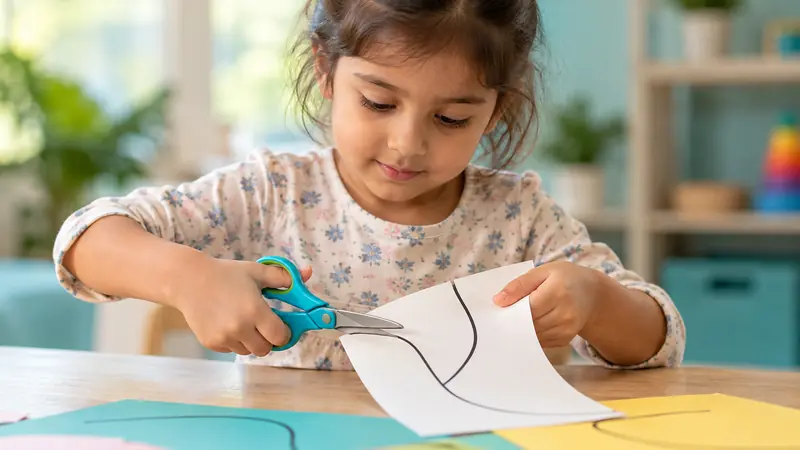
| Visual-motor integration | Mazes, tracing, copying shapes, drawing from step-by-step guides |
Visual closure activities
Visual closure, recognising something when only part of it is visible, is a common search for parents and teachers. Try:
- Half-drawn pictures: draw half a house or face and ask your child to finish it
- Peekaboo pictures: cover most of a picture with paper and slowly reveal it; guess early
- Puzzle with missing pieces: what’s in the gap?
- Dot-to-dots and incomplete letters to identify
- Flash cards of objects photographed at unusual angles
How occupational therapy helps
An occupational therapist assesses visual perceptual and visual-motor skills using standardised tests such as the TVPS-4 and the Beery VMI, along with observation of handwriting, reading-related tasks and daily activities. The OT then:
- works on the specific skills that are hard, through targeted games and activities
- teaches strategies, like scanning left to right and using a finger to keep place
- adapts materials and the environment at school and home
- works with teachers and, where needed, optometrists or eye doctors
Summary
Visual perceptual skills are how the brain makes sense of what we see. They support reading, writing, maths, self-care and play. If your child struggles, check eyesight first, then consider an OT assessment. Puzzles, games and simple classroom adaptations can make a big difference. Read more about fine motor skills and OT for children.
References
- Martin NA. Test of Visual Perceptual Skills, 4th edition (TVPS-4). Academic Therapy Publications; 2017.
- Beery KE, Beery NA. The Beery-Buktenica Developmental Test of Visual-Motor Integration (Beery VMI). 6th ed. Pearson.
- Schneck CM. Visual perception. In: Case-Smith J, O’Brien JC, eds. Occupational Therapy for Children and Adolescents. Elsevier.
Frequently asked questions
What are visual perceptual skills?
What is the difference between vision and visual perception?
What are the types of visual perceptual skills?
What are signs of visual perceptual difficulties?
How can I improve my child's visual perceptual skills?
Written by
Payal Mehta, OT
Payal Mehta is a practising occupational therapist and co-founder of Occupational Therapy OT. She writes on pediatrics, sensory integration, and mental-health practice.
All articles by Payal →This article is for general education and is not a substitute for individualized assessment or treatment by a licensed occupational therapist. Always seek the guidance of a qualified professional for specific concerns.