Bilateral Coordination: What It Is, Signs of Difficulty and 30 Activities
Bilateral coordination means using both sides of the body together. The 3 types, how it develops, signs of difficulty and 30 OT activities for home.

Try buttoning a coat with one hand, or cutting paper without holding it. Almost everything we do needs both sides of the body working together. That’s bilateral coordination.
What is bilateral coordination?
Bilateral coordination is the ability to use both sides of the body together in a smooth, controlled and organised way. It depends on the two sides of the brain communicating well, good body awareness (proprioception), balance and motor planning.
The three types of bilateral coordination
-
Symmetrical
Both sides do the same thing at the same time: clapping, pushing a toy with two hands, jumping with feet together.
-
Alternating (reciprocal)
Sides take turns: crawling, walking, climbing stairs, pedalling a tricycle.
-
Lead–assist (asymmetrical)
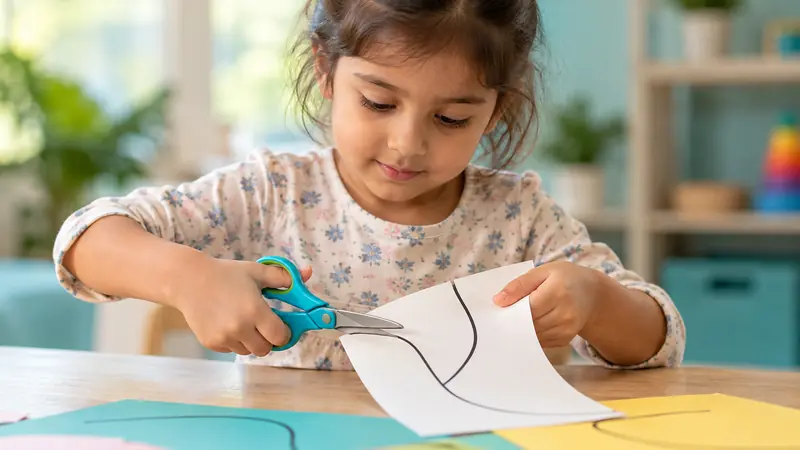
One hand leads, the other helps: cutting with scissors while turning the paper, writing while holding the page, threading beads.
The lead–assist pattern goes hand in hand with developing a hand preference, which usually settles somewhere between about 4 and 6 years.
Why it matters
| Area | Tasks that need bilateral coordination |
|---|---|
| Self-care | Dressing, buttons and zips, tying shoelaces, opening containers, using a knife and fork |
| School | Cutting with scissors, holding paper while writing, using a ruler, typing |
| Play and sport | Catching and throwing, jumping, skipping, swimming, riding a bike, climbing |
Signs of bilateral coordination difficulties
- Struggles with two-handed tasks like cutting, threading, buttoning or opening lunchboxes
- Doesn’t use the “helper hand” to hold the paper while writing or cutting
- Difficulty jumping with two feet together, doing jumping jacks or skipping
- Switches hands a lot, or hasn’t developed a clear hand preference by school age
- Seems clumsy, avoids ball games or playground equipment
- Has difficulty crossing the midline
These difficulties are common in dyspraxia (DCD), ADHD, autism and some sensory processing differences.
30 bilateral coordination activities
| Activity | Tip |
|---|---|
| 1. Clapping games and patty-cake | Add songs and speed up |
| 2. Rolling playdough with a rolling pin | Use both hands evenly |
| 3. Pushing a large ball with both hands | Roll it to a partner |
| 4. Catching a large ball | Start with a beach ball or balloon |
| 5. Jumping with feet together | Jump into hoops or over lines |
| 6. Wheelbarrow walking | Also builds shoulder strength |
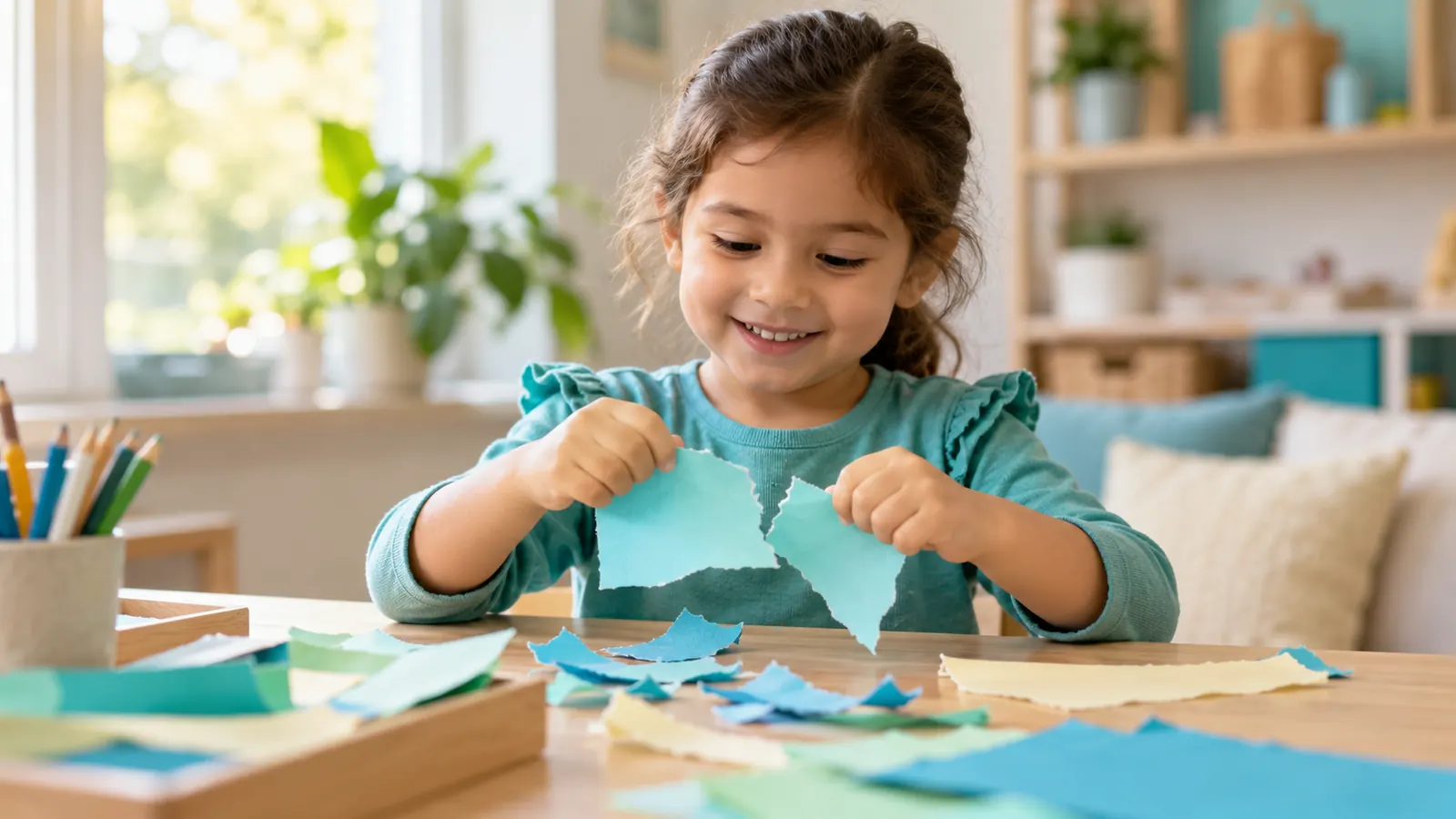
| 7. Tearing paper strips | For collage art |
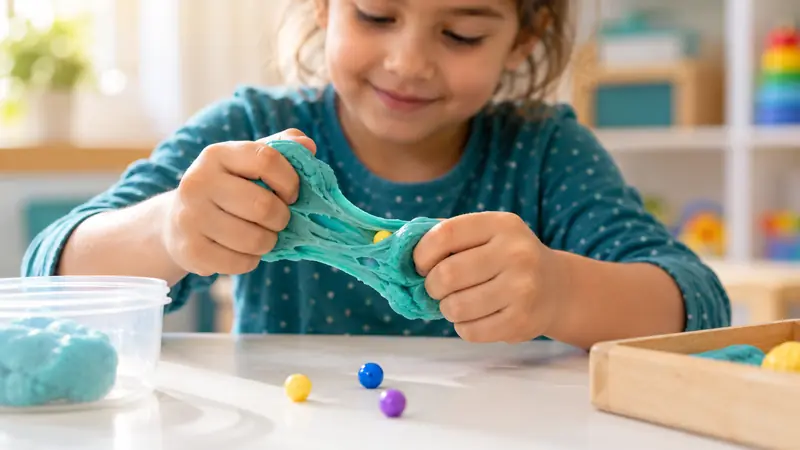
| 8. Pulling apart pop beads or Duplo | Great hand strengthener |
| 9. Rowing on the floor ('row your boat') | Hold hands with a partner |
| 10. Squeezing a ball with both hands | Count the squeezes |
| Activity | Tip |
|---|---|
| 11. Crawling through tunnels | Classic and effective |
| 12. Marching to music | Lift knees high, swing arms |
| 13. Climbing stairs and ladders | Alternate feet |
| 14. Pedalling a tricycle or bike | Great outdoor option |
| 15. Swimming | Front crawl and kicking |
| 16. Drumming with two sticks | Alternate left and right |
| 17. Animal walks (bear, crab) | Race to the finish line |
| 18. Jumping jacks | Break into steps if hard |
| 19. Skipping | Usually after age 5 |
| 20. Pulling a rope hand-over-hand | Tie a toy to the end |
| Activity | Tip |
|---|---|
| 21. Cutting with scissors | Helper hand turns the paper |
| 22. Threading beads or pasta | Start with large beads and a stiff lace |
| 23. Lacing cards | Helper hand holds the card |
| 24. Spreading butter on toast | Real-life practice |
| 25. Opening and closing containers | Lids, jars, zip bags |
| 26. Winding up a toy or yo-yo | Fun motor planning |
| 27. Tracing around a stencil | Helper hand holds it still |
| 28. Hammering golf tees into playdough | Helper hand holds the tee |
| 29. Peeling stickers | Hold the sheet, peel with the other |
| 30. Buttoning on a doll or a big shirt | Big buttons first |
How occupational therapy helps
An occupational therapist assesses your child’s coordination, motor planning, strength and sensory processing, often with standardised tests such as the Bruininks-Oseretsky Test of Motor Proficiency (BOT-2). The OT then designs activities targeting the skills your child needs for daily life, and suggests adaptations, like a non-slip mat under paper or a different type of scissors, that make two-handed tasks easier. Read more about gross motor skills and fine motor skills.
Summary
Bilateral coordination lets both sides of the body work as a team. It develops from symmetrical to alternating to lead–assist movements, and underpins self-care, school and play. Daily, playful activities are the best way to build it, and an OT can help if your child is struggling.
Related guides: Cutting activities for preschoolers, Motor planning activities.
References
- Case-Smith J, O’Brien JC. Occupational Therapy for Children and Adolescents. Elsevier.
- Bruininks RH, Bruininks BD. Bruininks-Oseretsky Test of Motor Proficiency, Second Edition (BOT-2). Pearson.
- Bundy AC, Lane SJ, eds. Sensory Integration: Theory and Practice. 3rd ed. F.A. Davis.
Frequently asked questions
What is bilateral coordination?
What are the three types of bilateral coordination?
Why is bilateral coordination important?
What are signs of poor bilateral coordination?
How can I improve my child's bilateral coordination?
Written by
Payal Mehta, OT
Payal Mehta is a practising occupational therapist and co-founder of Occupational Therapy OT. She writes on pediatrics, sensory integration, and mental-health practice.
All articles by Payal →This article is for general education and is not a substitute for individualized assessment or treatment by a licensed occupational therapist. Always seek the guidance of a qualified professional for specific concerns.